
 admin
admin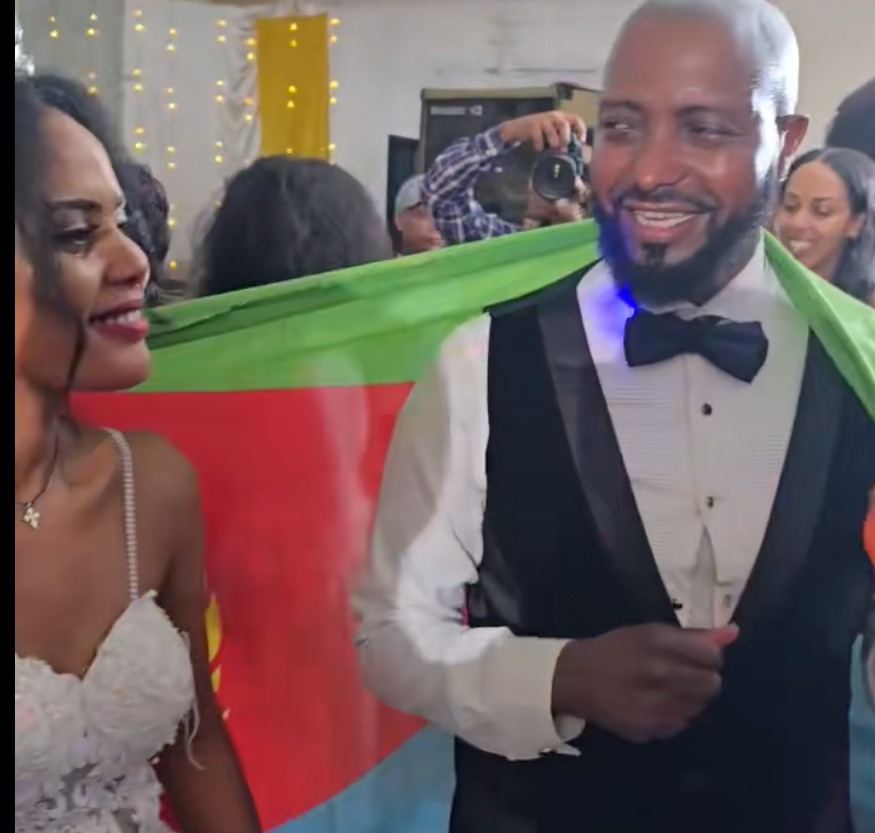
ANFET EDITORIAL-January 23, 2026
Weddings are among the last untouched spaces in Eritrean life — places where joy, family, and culture briefly overpower the weight of politics. Yet even these sacred spaces are now being dragged into the arena of political confrontation. What should be a celebration of love has become the latest battleground in a long, painful history of flags, identity struggles, and state-driven pressure. ANFET believes this intrusion must end immediately.
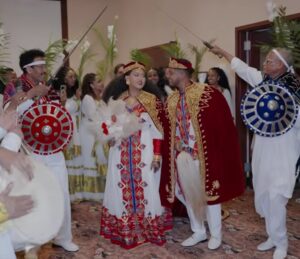
Flags are not decorations. They are political instruments, symbols of power, and reminders of eras that shaped — and scarred — the Eritrean people. When a flag enters a wedding hall, it does not arrive as a harmless piece of fabric. It arrives carrying the weight of history, the authority of governments, and the agendas of those who wish to impose their political identity on a private celebration. No bride or groom should be forced to carry that burden on their wedding day.
To understand why this issue has become so explosive, one must understand the long and complicated journey of flags in Eritrean life. For more than a century, Eritreans have lived under flags they did not choose. When Italy declared Eritrea a colony in 1890, it planted its tricolor over the land and ruled through force. When the British defeated the Italians in 1941, the Union Jack replaced it, marking yet another chapter of foreign control. A decade later, the United Nations imposed a federation with Ethiopia, and Eritrea found itself flying two flags — its own blue flag alongside the Ethiopian tricolor — a fragile arrangement that lasted only until 1958, when the Emperor unilaterally stripped Eritrea of its flag. Even wedding halls in Asmara and Keren were decorated with the Ethiopian flag as a political message: the federation was dead, and Eritrea’s identity was being erased.
The years that followed were defined by resistance. Eritreans launched an armed struggle in 1961, fighting under no official national flag but united by the dream of reclaiming one. When Ethiopia formally annexed Eritrea in 1963, the Ethiopian flag became the only legal symbol of authority until independence in 1991. During the liberation years, the EPLF flew the blue Eritrean flag and its own yellow-star emblem — symbols of a movement, not yet a state. But in 1993, after Eritrea became a UN-recognized nation, a new national flag appeared without consultation, referendum, or public debate. It was simply declared the flag of the country, and Eritreans were expected to accept it without question.
This history matters because it explains why flags in Eritrean communities are never neutral. They are tied to domination, resistance, trauma, and political control. They evoke pride for some, pain for others, and suspicion for many. They divide more than they unite. And that is precisely why they do not belong in wedding halls.
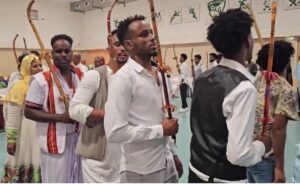
The diaspora’s recent conflict over flags is a continuation of this long story. For years, the opposition largely ignored the 1993 flag, focusing instead on political organizing. But in 2023, the Brigade N’hamedu youth movement revived the Eritrean blue flag with overwhelming enthusiasm. It became a symbol of cultural pride and generational renewal — a peaceful, colorful assertion of identity. The regime panicked. Its response was swift and predictable: flood diaspora communities with mass-produced red flags, reminiscent of Soviet-era propaganda banners, in an attempt to drown out the blue wave.
Suddenly, a youth-driven cultural revival became a political confrontation. And the most inappropriate battlefield chosen for this confrontation was the wedding hall.
In recent months, Eritrean communities have witnessed a disturbing phenomenon now known as FLAG-gate — the attempt to force couples to display the government flag at their weddings. This pressure has delayed ceremonies, created arguments between families, caused emotional distress for brides and grooms, and turned joyful events into political standoffs. The majority of Eritreans — especially the young couples — want nothing to do with this. They want music, love, and celebration, not political coercion.
It is important to note that no blue-flag group has disrupted a wedding. The disruptions have come from those attempting to impose the government flag through pressure, guilt, or intimidation. This is not patriotism. It is political intrusion into private life.
A wedding is not a political rally. It is not a referendum. It is not a stage for red versus blue. It is a sacred social event that binds two families and celebrates the future of two young adults. The community’s role is to support the couple, not to pressure them. If the bride and groom want no flags, that decision must be respected. If they want neutral decorations, that must be respected. If they want a purely cultural celebration, that must be respected. No government — and no opposition group — has the right to hijack their day.
Eritrean communities have survived war, displacement, trauma, and decades of political division. Weddings are one of the few spaces where unity still feels possible. When politics enters that space, it does not bring pride — it brings conflict. The politicization of weddings weakens community trust, fuels generational tension, deepens diaspora divisions, and turns joy into anxiety. This is not who we are. This is not what our culture stands for.
ANFET calls on all Eritreans — regardless of political affiliation — to protect the dignity of our social life. Stop forcing flags into wedding halls. Stop pressuring young couples. Stop importing political battles into family celebrations. Stop turning joy into conflict.
Let weddings be weddings.
Let love be love.
Let families celebrate without fear, pressure, or political manipulation.
Eritrea’s political history is long, painful, and complicated. Flags have been used to dominate, divide, and control. But our weddings — our social fabric — must remain untouched. We owe it to our youth. We owe it to our communities. We owe it to our dignity.
From history to halls, the message is clear: keep politics out of weddings — red or blue.
Let the bride and groom have their day.
Let Eritrean joy remain free.