
 admin
admin
ANFET Editorial-January 2, 2026
Ambassador Andeberhan Woldegiorghis’s New Year message for 2026 arrived with the tone and confidence of a seasoned statesperson. It was eloquent, patriotic, and rich with the familiar vocabulary of democratic renewal — rule of law, constitutional governance, youth empowerment, and national reconstruction. Eritreans across the diaspora, weary from decades of repression and longing for a path forward, heard in his words the echoes of a future they have imagined for far too long. Yet as the speech circulated, a more pressing question rose to the surface: what political platform stands behind these words, and who is prepared to turn them into action?
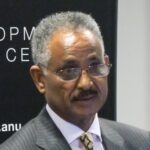
To his credit, Ambassador Andeberhan is not a passive observer of Eritrean politics. When the Eritrean National Council for Democratic Change (ENCDC) was preparing for its second congress in Addis Ababa, he stepped forward and offered a large venue in Nairobi — an effort that, while falling short of producing unity, demonstrated initiative at a moment when the movement desperately needed it. He also convened political actors and interest groups in Germany and elsewhere, attempting to spark dialogue on the Eritrean crisis. And over the years, he has remained a consistent voice in diaspora political discourse, contributing analysis and commentary with clarity and conviction. These contributions matter, and they deserve recognition.
But the political reality confronting Eritreans today is not a shortage of ideas, nor a shortage of patriotic speeches. It is the absence of a unified, credible organizational structure capable of transforming aspiration into coordinated political action. And on this central issue, the Ambassador’s message remains conspicuously silent. His speech reads as though delivered from a national platform, yet he currently stands outside any unified opposition body. He speaks with the authority of a collective mandate, but without the institutional backing that gives such a voice political weight. This contradiction — between the tone of leadership and the absence of a leadership platform — is the defining tension of the message.
The speech outlines everything Eritreans want: justice, accountability, democratic transition, economic revival, and institutional reform. But it does not address the only question that matters at this stage of the struggle: who will organize the forces capable of delivering these goals? Without a unified political vehicle, these aspirations remain suspended in rhetoric. They inspire, but they do not mobilize. They describe the destination, but ignore the vehicle. And in a diaspora landscape defined by fragmentation, fatigue, and competing personal networks, this omission is not a minor oversight — it is the heart of the problem.
This is not an issue unique to the Ambassador. It is a pattern that has weakened the diaspora for two decades: individual initiatives, selective meetings, personal circles, and fragmented efforts that generate discussion but not structure. The Ambassador’s speech, intentionally or not, reinforces this pattern. It offers vision without architecture, commentary without commitment, and leadership language without leadership structure. Eritrea’s political crisis today is not a crisis of imagination. It is a crisis of organization. And until that crisis is confronted directly, no amount of eloquence will move the struggle forward.
Given his diplomatic background and public stature, Ambassador Andeberhan is uniquely positioned to help build a credible united front. He could lend his experience to a collective platform, strengthen institutional processes, and contribute to the formation of a unified political body capable of representing the Eritrean people. But his speech does not call for unity, does not acknowledge the fragmentation crisis, and does not commit to joining or strengthening any platform. It is a missed opportunity at a moment when the diaspora urgently needs political actors willing to step into collective structures rather than stand outside them.
Eritrea’s struggle today demands more than hopeful words. It demands unified leadership, credible institutions, coordinated strategy, and political figures prepared to engage in the hard, unglamorous work of building a movement. Until these elements are addressed — and until figures like the Ambassador commit to organizational engagement rather than individual commentary — the diaspora will continue to drift between speeches and stagnation. The Eritrean people deserve more than inspiration. They deserve a political force capable of turning inspiration into action.