
 admin
admin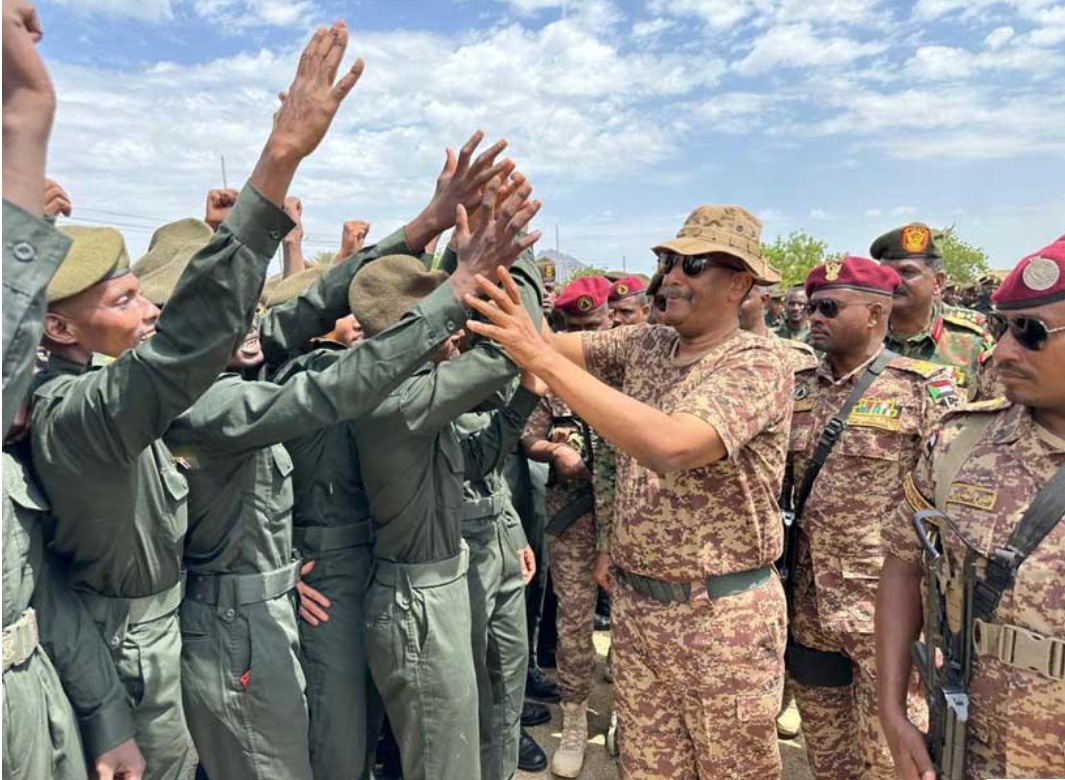
Liberation Is Moving Closer to Our Borders- Who Will Seize the Moment?
ANFET EDITORIAL — MARCH 15, 2026
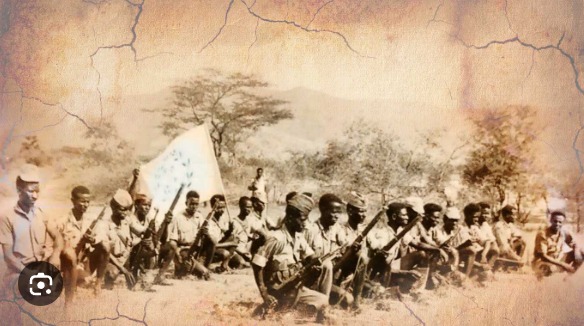
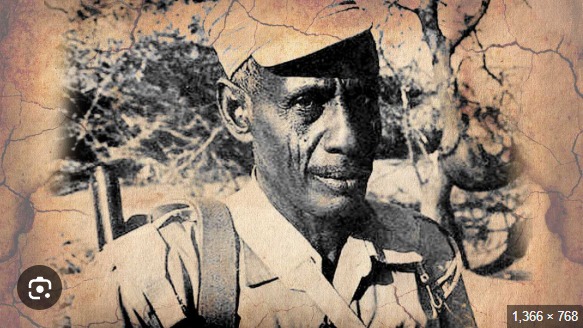
61st Anniversary of the Victory at Togoruba-March 15, 1964
A Historic Date Meets a Historic Moment
March 15 is a defining date in Eritrean history. On this day in 1964, the Eritrean Liberation Army won the Battle of Togoruba, its first major military victory-a moment that proved unity and determination could overcome overwhelming odds. Sixty-two years later, on March 15, 2026, the region around Eritrea is again shifting. A new geopolitical realignment is unfolding on our western border, and its implications for Eritrea’s future are profound.
1. Sudan’s Turning Point: Iran Steps In, UAE Steps Back
Sudan’s civil war has long been shaped by foreign sponsorship. For years, the United Arab Emirates (UAE) supported the Rapid Support Forces (RSF) with weapons, logistics, and political cover.¹The balance shifted sharply when Iran re-entered Sudanese politics, supplying the Sudanese Armed Forces (SAF) with drones, training, and intelligence support.² This assistance enabled the SAF to retake cities previously held by RSF units. As the confrontation between Iran and Gulf states escalated, the UAE’s ability to sustain RSF operations weakened. Supply lines tightened, funding slowed, and RSF momentum collapsed. Across Sudan, civilians celebrated SAF advances-not because the war is over, but because the tide has visibly turned.
2. A New Red Sea Equation
Iran’s return to Sudan is strategic, not symbolic. Tehran seeks influence along the Red Sea corridor, from Yemen to Sudan, to counter Gulf rivals and secure maritime leverage. ³ This shift has three major consequences:
UAE influence in the Horn is shrinking
Sudan’s western and northern regions are stabilizing under SAF control
The Red Sea is becoming a contested geopolitical arena, no longer dominated by Gulf states For Eritrea-long entangled in Gulf rivalries-this transformation is profound
3. What This Means for Eritrea’s Liberation Movement
i. The PFDJ Regime Is Losing a Key External Pillar
For over a decade, the PFDJ regime relied heavily on Gulf states — especially the UAE — for political cover, financial support, and military cooperation, including the Assab base. ⁴ As the UAE turns inward, Asmara’s strategic value to Abu Dhabi is diminishing. A regime that once leveraged Gulf rivalries now finds itself with fewer patrons and fewer bargaining chips.
ii. A Stabilizing Sudan Reduces PFDJ’s Leverage
Instability in Sudan has long served PFDJ interests. Chaos across the border allowed Asmara to manipulate refugee flows, intelligence networks, and cross-border dynamics. ⁵ A stronger, Iran-backed Sudanese state changes this calculus.
If SAF consolidates control:
Eritrea’s western border becomes more predictable
Sudanese intelligence cooperation may shift away from PFDJ
Eritrean civic and political actors may find more operational space
A stable Sudan is not automatically democratic-but it is less exploitable by the PFDJ.
iii. A Regional Power Vacuum Creates Opportunity-If Eritreans Are Ready
As Gulf states retreat and Sudan reorients toward Iran, a temporary vacuum is emerging in the Horn. Such vacuums are dangerous-but they are also moments of possibility. For Eritrea’s democratic forces, this means:
More diplomatic space to organize without Gulf interference
More regional attention on Red Sea security
More urgency for Eritrean political organizations to unify
Liberation does not arrive automatically. It arrives when political forces are prepared to seize the moment.
4. Who Will Take Advantage of This Moment?
Those who stand to gain
Eritrean democratic forces — if united
Sudan’s SAF — consolidating power with Iranian backing
Iran — expanding influence along the Red Sea
Regional civil movements — benefiting from reduced Gulf intervention
Those who stand to lose
The PFDJ regime — deprived of Gulf support
RSF and its backers — weakened by shifting alliances
The UAE — forced to reduce its footprint in the Horn
The question is not whether the region is changing.
It is who will be ready when the change reaches Eritrea’s borders.
5. A Call for Strategic Unity On this anniversary of Togoruba, Eritreans are reminded that unity, discipline, and clarity of purpose can change the course of history.
Today, the region is moving.
Borders are shifting.
Alliances are realigning.
Liberation is coming closer to Eritrea-but only a united Eritrean platform can transform regional change into national freedom.
The ENCDC, EPF, ECDC, civic movements, youth networks, and independent actors must recognize that geopolitical windows do not remain open forever. Togoruba taught us that victory belongs to those who are prepared. March 15, 2026, reminds us that the next chapter of Eritrea’s struggle may be written sooner than expected.
ENDNOTES
1 Reports by UN monitoring groups and regional analysts documenting UAE support to RSF.
2 Open-source military assessments confirming Iranian drone transfers and SAF battlefield gains.
3 Red Sea geopolitical analysis from regional think tanks and maritime security institutions.
4 Documentation of UAE–Eritrea military cooperation, including the Assab base.
4 Historical patterns of Eritrea–Sudan border dynamics and PFDJ exploitation of instability.