
 admin
admin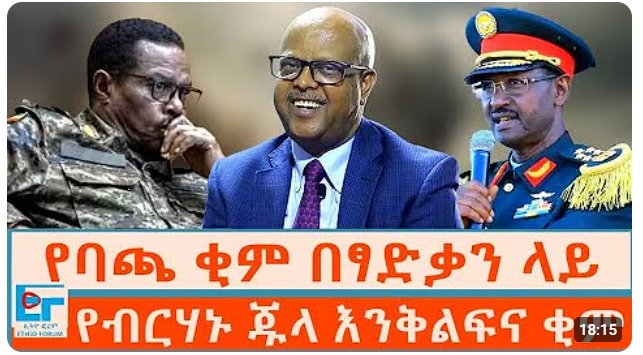
By ANFET Transitional Editorial Desk – October 28, 2025
How old battlefronts and new accusations are reshaping the Horn of Africa’s fragile balance. Ethiopian generals, Sudan’s RSF, and Gulf alliances converge on Asmara’s contested role. Historical retribution, regional rivalries, and the making of a new Horn of Africa crisis.
Introduction
The Horn of Africa is once again trembling under the weight of unfinished wars and new rivalries. Eritrea, a nation forged in defiance and independence, now finds itself at the center of overlapping storms: Ethiopian generals seeking retribution, Sudan’s Rapid Support Forces (RSF) accusing Asmara of meddling, and Gulf powers shaping the battlefield from afar. What began in Badme in 1998 has now stretched to Khartoum in 2023, placing Eritrea at the crossroads of ambition, accusation, and survival.
Old Wounds, New Fronts
For Ethiopia’s military elite, the scars of the Ethio-Eritrean war never healed. Generals such as Berhanu Jula and Bacha Debelie, once prisoners of war, carry the memory of defeat both by force and by referendum.
Gen. Bacha Debelie reportedly sought to play a decisive role in the 1998 Badme war, but then-Chief of Staff Gen. Tsadkan redirected him south to Harar.
These frustrations simmered for decades, resurfacing after the Tigray conflict, when Ethiopian commanders began to envision a renewed campaign against Eritrea.
Today, these generals are publicly campaigning for war, inviting former officers of the Dergue and even Haile Selassie’s era, including naval commanders, to lend symbolic weight. Their message is clear: Eritrea remains unfinished business.
Hemedti’s Accusations and the Sudanese Front
The Sudanese civil war has widened Eritrea’s exposure. Mohamed Hamdan Dagalo (Hemedti), leader of the RSF, has accused Eritrea of supporting General Abdel Fattah al-Burhan, Sudan’s army chief.
According to Analytica Today, Hemedti has raised his voice “loudly,” linking Eritrea with UAE backing and Ethiopian government alignment in the conflict.
This narrative positions Eritrea not just as a neighbor, but as an active spoiler in Sudan’s war, drawing Asmara into a conflict it cannot easily control.
By invoking Eritrea, Hemedti internationalizes his struggle, framing his fight against Burhan as part of a broader regional conspiracy.
The Gulf Connection
The United Arab Emirates looms large in this equation. Its ties to both Ethiopia and Sudan’s factions complicate the battlefield. Eritrea, with its Red Sea coastline, becomes a strategic prize — a staging ground for influence, logistics, and projection of power. For Asmara, this means being caught between Ethiopian ambition, Sudanese accusations, and Gulf opportunism.
Diaspora Unity vs. Government Disunity
Beyond the regional pressures, Eritrea faces an internal contradiction. Diaspora communities, political parties, and civic organizations—many of them long critical of authoritarian governance—are nonetheless mobilizing in defense of Eritrea’s sovereignty, territorial integrity, and international legitimacy as a UN member state.
Yet instead of creating official channels to harness this unity, the government has chosen to send out personalities who insult opposition, leaders, media and YouTubers, a tactic that pales in comparison to the wisdom and discipline of the opposition parties themselves.
This failure to rally the nation, including its critics, risks weakening Eritrea’s internal cohesion at precisely the moment when external threats demand unity. The irony is stark: while the opposition remains critical of governance, it is also standing with the people against war and against the denial of Eritrea’s right to self-determination. The government, by contrast, is squandering an opportunity to transform diaspora solidarity into national strength.
Eritrea’s Precarious Crossroads
The convergence of these dynamics creates a combustible environment:
Ethiopia’s generals seek retribution for past defeats.
Sudan’s RSF blames Eritrea for tilting the balance in Khartoum.
Gulf actors see Eritrea as a pawn in their Red Sea strategy.
Diaspora communities mobilize for sovereignty, while the government undermines their efforts.
Eritrea risks being framed simultaneously as a historic enemy of Ethiopia, a current spoiler in Sudan, and a divided house internally. Its hard-won independence, once a symbol of resilience, now makes it a lightning rod for regional rivalries.
Conclusion
From Badme to Khartoum, Eritrea’s story is no longer just about its own survival. It is about how old wars are being reimagined as new campaigns, how historic grievances are weaponized in present conflicts, and how small states become pivotal in great rivalries.
But it is also about whether Eritrea can overcome its internal contradictions. The diaspora and civic organizations are already mobilizing in defense of sovereignty. The question is whether the government will recognize that unity as a national asset—or continue to squander it through division and denial.
The Horn of Africa’s fragile balance is shifting once again — and Eritrea, willingly or not, stands at its center.
Citations
YouTube source: “Ethiopian Generals’ Campaign Against Eritrea”
Analytica Today: “Hemedti’s Drone Targets Egypt and Eritrea” (Analytica Today, 2023)