
 admin
admin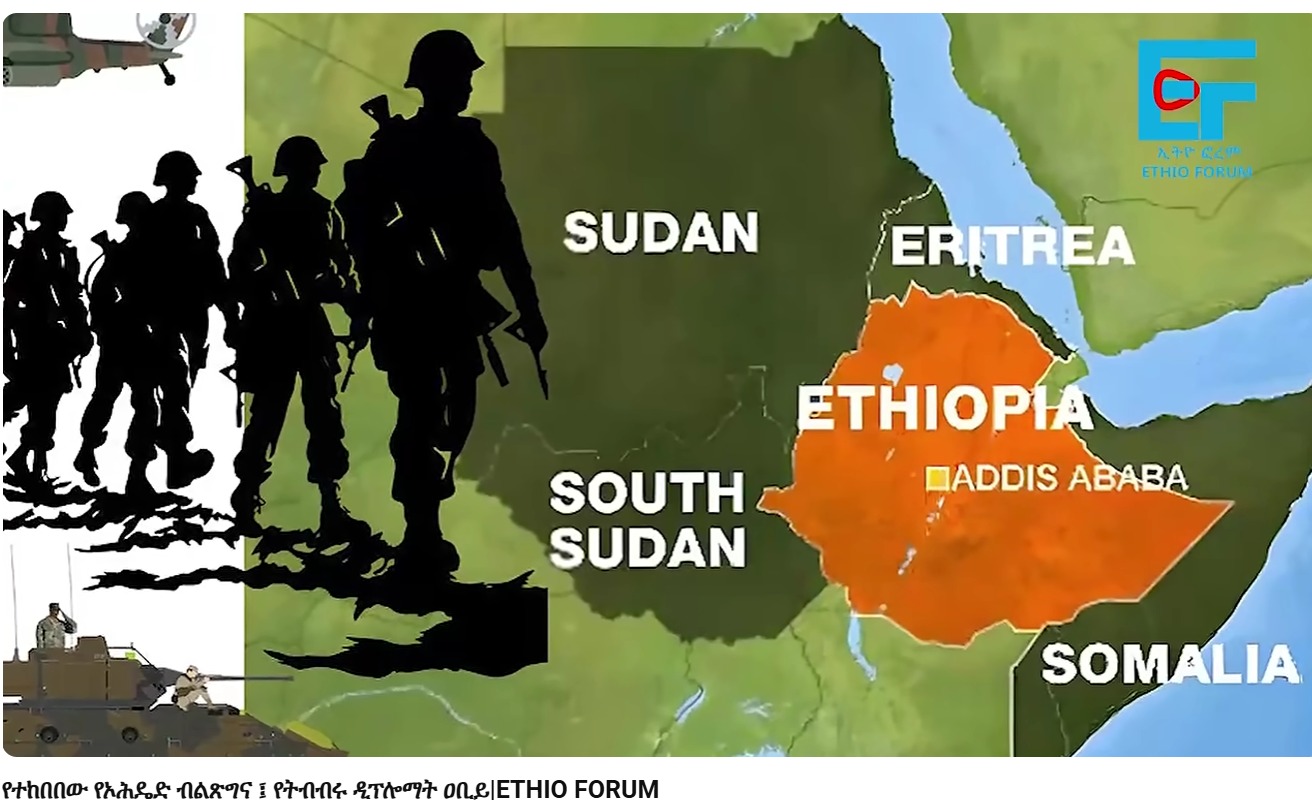
Red Sea Sovereignty Rising: Ethio‑Forum’s Landmark Case Against Ethiopian Aggression
ANFET Editorial-October 7, 2026
Ethio‑Forum today delivered a broadcast that will be remembered as a turning point in the political consciousness of the Horn of Africa and the wider Red Sea basin. In a region where narratives are often fragmented, politicized, or distorted by competing interests, this particular analysis stood out for its clarity, its legal grounding, and its refusal to bend under the weight of regional pressure. Ethio‑Forum presented a complete and uncompromising legal case on behalf of Eritrea, Sudan, Somalia, and Egypt, the four nations that recently signed an agreement to confront Ethiopian aggression together. The broadcast did not merely comment on events; it constructed a full legal and geopolitical argument that exposes the violations committed by the Ethiopian government under Abiy Ahmed and situates them within the broader framework of international law. The original broadcast can be accessed here: https://youtu.be/ImSO3_jWtho?is=m4LWAu1uVNIjSvRq.
From the outset, Ethio‑Forum made it clear that the actions of Ethiopia are not isolated incidents or misunderstandings between neighboring states. They are part of a deliberate pattern of behavior that undermines the sovereignty of other nations, destabilizes regional security, and violates the foundational principles of the United Nations Charter, the African Union Constitutive Act, and the IGAD protocols that govern regional cooperation and conflict resolution. Ethio‑Forum argued that Ethiopia’s current posture is not a matter of internal policy or domestic governance; it is a regional threat with international implications. The broadcast emphasized that sovereignty is not a negotiable concept, nor is territorial integrity a flexible political tool. These principles form the backbone of international order, and any violation of them must be confronted with legal clarity and collective resolve.
Ethio‑Forum’s analysis was structured in a way that foreign ministers of the four nations could take it directly to the Secretary‑General of the United Nations, to the African Union, and to IGAD without needing to add further justification. The broadcast itself functions as a ready‑made submission, a complete evidentiary and legal package that demonstrates Ethiopia’s violations and articulates the rights of the four nations to defend their sovereignty. Ethio‑Forum stated that the international community does not need to wait for further escalation or additional documentation; the violations are already clear, the aggression already visible, and the consequences already unfolding across the region. The broadcast argued that Ethiopia’s actions have crossed the threshold of acceptable state behavior and now stand in direct contradiction to the norms that govern peaceful coexistence among nations.
In its expanded analysis, Ethio‑Forum also addressed the role of citizens within this unfolding regional crisis. It made a critical distinction between opposing one’s own government and supporting unlawful aggression against neighboring states. Ethio‑Forum affirmed that citizens of Eritrea, Sudan, Somalia, Egypt, and Ethiopia itself have the full right to oppose their own regimes, to demand democratic change, constitutional governance, and accountability. These rights are universal and cannot be suppressed by any government. However, the broadcast warned that no citizen should align themselves with actions that violate regional sovereignty or support policies driven by Abiy Ahmed, whom the analysis portrays as pursuing destabilizing ambitions backed by foreign sponsors. Ethio‑Forum argued that internal political struggle is legitimate and necessary, but it must not be confused with supporting aggression disguised as national interest. Citizens may fight their own governments today and forever until they achieve democratic change, but they must not stand on the side of Ethiopia’s unlawful regional posture or lend legitimacy to violations that threaten the stability of the entire region.
The expanded editorial went further, examining the geopolitical motivations behind Ethiopia’s actions. Ethio‑Forum argued that Ethiopia’s current leadership is attempting to reshape regional dynamics through coercion, misinformation, and manufactured crises. It stated that Ethiopia’s ambitions are not rooted in genuine national interest but in a political project designed to elevate the power of a small ruling circle at the expense of regional peace. Ethio‑Forum emphasized that such ambitions cannot be allowed to stand, not only because they violate international law, but because they threaten the delicate balance of the Horn of Africa, a region already burdened by historical grievances, fragile borders, and complex ethnic and political identities. The broadcast argued that Ethiopia’s actions risk igniting conflicts that could spread far beyond its borders, drawing in neighboring states and destabilizing the Red Sea corridor, one of the most strategically important regions in the world.
Ethio‑Forum’s expanded editorial also highlighted the responsibility of regional institutions. It argued that the African Union and IGAD must not remain silent or neutral in the face of clear violations. Silence, the broadcast warned, is not neutrality; it is complicity. Ethio‑Forum stated that regional institutions were created to prevent exactly this kind of aggression, and their credibility depends on their willingness to confront violations decisively. The broadcast urged these institutions to act not out of political convenience, but out of legal obligation and moral responsibility. It argued that the stability of the region depends on the enforcement of norms, and that failure to act would embolden future violations and undermine the very foundations of regional cooperation.
In its concluding analysis, Ethio‑Forum declared that this broadcast represents the strongest and most coherent document yet produced to counter and defeat the regional ambitions attributed to Abiy Ahmed. It is not merely an editorial; it is a legal instrument, a geopolitical roadmap, and a call to action. Ethio‑Forum framed it as a decisive narrative that dismantles Ethiopia’s claims, exposes its violations, and empowers the four nations to stand firmly within the boundaries of international law. The broadcast argued that the region is entering a new phase of political maturity, where nations are prepared to defend their sovereignty through legal clarity, collective action, and principled resistance. It stated that aggression will no longer be tolerated, that violations will no longer be ignored, and that the era of unilateral regional domination is coming to an end.
Ethio‑Forum’s message, in its expanded form, is clear and uncompromising. The Horn of Africa is awakening to a new political reality, one in which sovereignty is defended, aggression confronted, and regional solidarity strengthened. This editorial captures that awakening in a steady, uninterrupted stream, presenting the full weight of the broadcast as a unified ANFET‑style narrative designed to confront aggression, uphold sovereignty, and articulate the regional case with unwavering pr
ecision.