
 admin
admin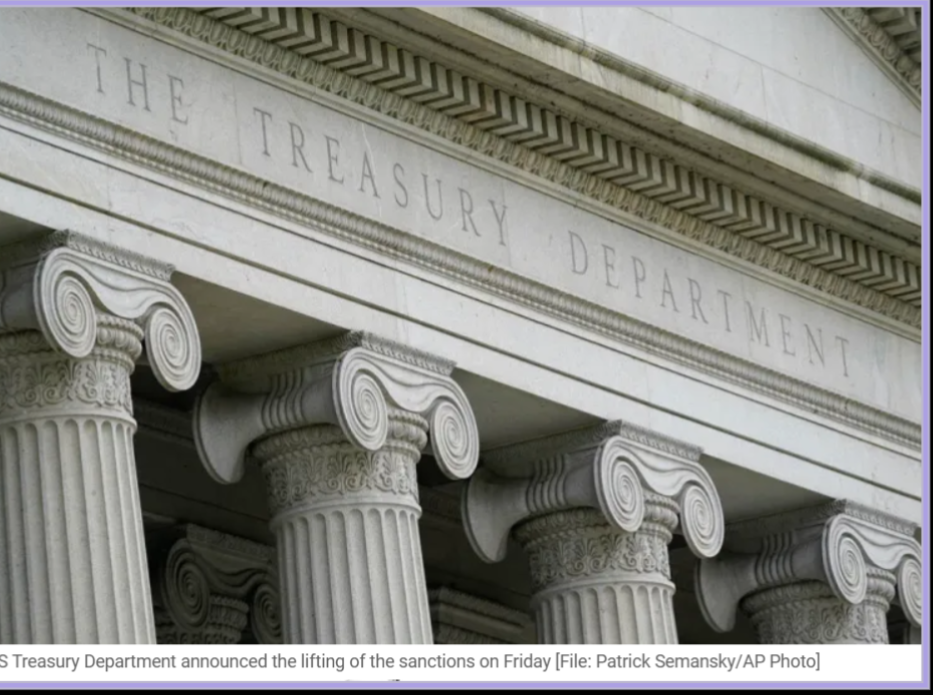
Twice Betrayed: How Sanctions Were Lifted for the Wrong Reasons-And How Eritrea and Ethiopia Paid the Price
ANFET Editorial – September 20, 2026
When sanctions are lifted, the world expects a story of reform, accountability, and a new beginning. But in the Horn of Africa, the lifting of sanctions on Eritrea- first in 2016 and 2018, and again today- has become a chronicle of political miscalculation. It is a story in which powerful actors, driven by their own strategic anxieties, relieved pressure on governments while increasing pressure on the people who live under them. It is a story of two nations- Eritrea and Ethiopia- whose citizens have repeatedly borne the cost of decisions made far from their daily realities.
The first episode came in 2018, during the celebrated rapprochement between Prime Minister Abiy Ahmed and President Isaias Afwerki. The world applauded the images of leaders embracing, flags waving, and borders reopening. But beneath the choreography lay a political pact that had little to do with peace and everything to do with war. The sanctions were lifted not because Eritrea had democratized, liberalized, or opened its institutions, but because Abiy and Isaias had found common cause in isolating and punishing the Tigray People’s Liberation Front- the only organized political and military force capable of resisting both leaders’ ambitions.
The so-called “peace agreement” was never institutional. It was personal. It was not a treaty between states; it was a handshake between two men. And it was not designed to stabilize the region; it was designed to prepare it for war. The border was never demarcated. The legal mechanisms of the Algiers Agreement were never implemented. The Ethiopia–Eritrea Boundary Commission’s ruling remained frozen in time. Instead of demarcation, the world witnessed militarization. Instead of reconciliation, it witnessed coordination. The lifting of sanctions became a tool- not for peace, but for the destruction of Tigray.
The second episode came from Washington. In 2016, the United States lifted sanctions on Eritrea under the assumption that Asmara might pivot toward constructive regional engagement. That assumption proved unfounded. Eritrea did not democratize. It did not open humanitarian corridors. It did not implement its constitution. It did not reform national service. It did not reduce its regional military footprint. The sanctions were lifted, and nothing changed.
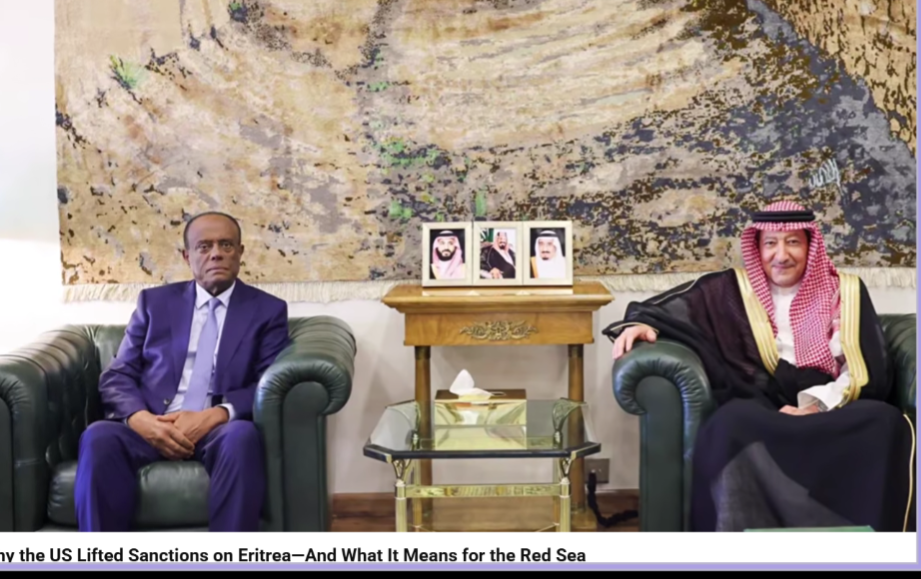
Today, in 2024–2026, the United States has again eased pressure on Eritrea- but for reasons even further removed from the realities of the Eritrean people. Facing strategic setbacks in its confrontation with Iran and pressured by regional allies, Washington has turned to the Red Sea with renewed urgency. The U.S. needs access, stability, and logistical flexibility. And in this moment of geopolitical anxiety, Eritrea has once again become a convenient partner- not because it has reformed, but because the United States needs relief from its own strategic quagmire.
Meanwhile, the Eritrean people stand on the brink of severe food shortages and possible famine. Public services have collapsed. Humanitarian access remains restricted. And the national economy- already suffocated by militarization and state control- has been thrown into deeper chaos by the regime’s erratic monetary policies. Only three months ago, the government forced a sudden currency replacement, compelling citizens to surrender their savings under threat and confusion. Millions were lost overnight. Families who had saved for years saw their money evaporate in a matter of hours. The Bank of Eritrea, once nominally responsible for national monetary policy, now administers little more than remittances from the diaspora. It has ceased to function as a central bank in any meaningful sense. There is no monetary strategy, no inflation management, no fiscal transparency. The entire financial system has been reduced to a mechanism for extracting hard currency from citizens abroad while impoverishing those at home.
This economic collapse is not accidental. It is structural. And it mirrors the political collapse that has unfolded over decades. In their cooperative moments, the Eritrean and Ethiopian regimes have often mirrored each other’s most destructive policies. When Abiy Ahmed sought to consolidate power, he borrowed from the Eritrean playbook: closing universities, expanding national service, abolishing free higher education, and turning graduating high school students into permanent soldiers. In Eritrea, these policies have existed for decades- young people conscripted indefinitely, without salaries, without rights, without futures. In Ethiopia, the replication was swift and devastating. The gain was never for the people; it was for the rulers.
In both countries, the youth became currency. Education became a privilege. The military became a labor force. And the state became an extractor rather than a provider. These policies, combined with the lifting of sanctions without reform, created a perfect storm: governments relieved of external pressure, economies stripped of resilience, and populations left defenseless.
The consequences are now visible across the region. The Northern War, one of the most devastating conflicts in modern African history, was made possible by the political alignment of 2018. The current humanitarian crisis in Eritrea is deepened by the absence of external leverage. The Red Sea corridor is becoming increasingly militarized. Regional institutions remain weak. And the people-ordinary citizens in Asmara, Massawa, Mekelle, Addis Ababa, and the border towns- continue to pay the price for decisions made in capitals far from their own.
History will record these episodes not as diplomatic breakthroughs, but as missed opportunities. The lifting of sanctions could have been used to demand border demarcation, constitutional governance, democratization, economic transparency, humanitarian access, and regional non-interference. It could have been used to stabilize the Horn of Africa. It could have been used to protect the people of Eritrea and Ethiopia.
Instead, sanctions were lifted for the wrong reasons-twice. And twice, the people were left to bear the consequences.
ANFET’s position is clear: sanctions must serve the people, not geopolitical convenience. They must be tied to reforms, not relationships. They must be instruments of accountability, not tools of expediency. The Horn of Africa cannot afford another miscalculation. The cost has already been too high.