
 admin
admin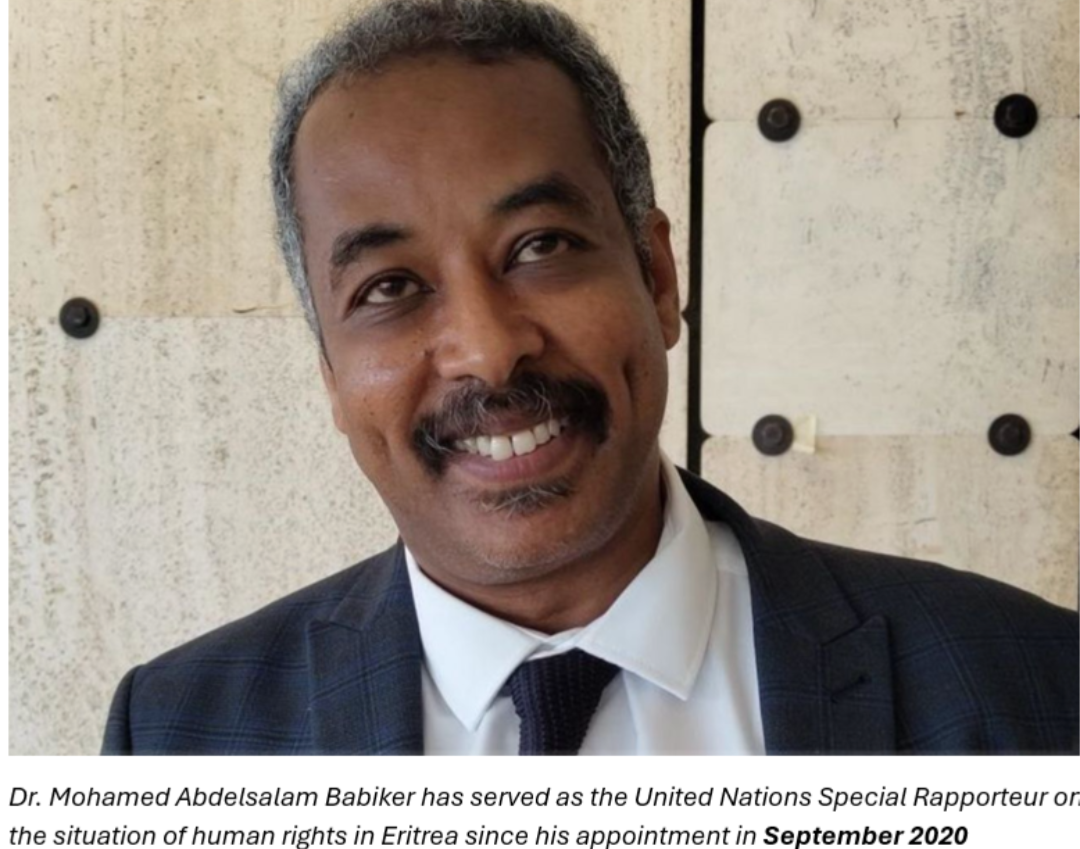
The Last UN Lifeline: Why Eritrea Cannot Afford to Lose the Special Rapporteur
ANFET EDITORIAL-June 23, 2026
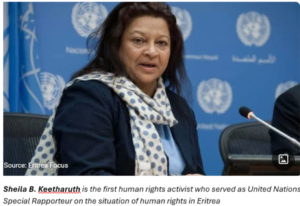
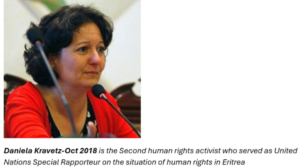
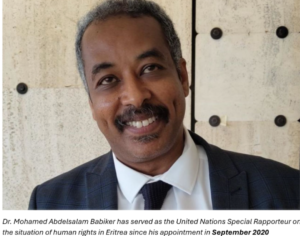
For more than a decade, the UN Special Rapporteur on the situation of human rights in Eritrea has served as the last institutional lifeline connecting Eritrean victims to the international system. From Sheila B. Keetharuth to Daniela Kravetz to Dr. Mohamed Abdelsalam Babiker, each mandate holder has carried out a task that Eritreans themselves were denied the freedom to perform: documenting abuses, preserving evidence, and keeping Eritrea on the agenda of the world’s conscience.
Last week in Geneva, that lifeline was tested in full view of the international community. Eritrea’s ambassador, Sofia Tesfamariam, attempted to deliver her familiar script of denial and deflection. But this time, the Human Rights Council did not simply listen. It pushed back. Delegates demanded answers: Why does Eritrea still block all UN human rights mechanisms? Where are the disappeared? Why are there no trials, no transparency, no reforms?
When Sofia insisted that “there are no political prisoners in Eritrea,” a delegate asked whether the government was prepared to provide a list of all detainees. The silence that followed was not diplomatic. It was damning. Geneva exposed what Eritreans have long known: the regime cannot defend the indefensible. And in that moment, the importance of the Special Rapporteur’s mandate became unmistakably clear. It remains the only UN voice Eritreans still have.
The regime understands this better than anyone. That is why it is intensifying its campaign to dismantle the mandate. It is mobilizing diplomats, activating alliances, and attempting to replace accountability with propaganda. Its objective is simple: erase the witness. The Special Rapporteur is the only internationally recognized witness to decades of abuses- from indefinite national service to enforced disappearances to transnational repression. Eliminating the mandate would allow the regime to bury the record and silence the victims.
This danger is compounded by a reality the world must confront: the Eritrean government will never allow the Special Rapporteur or any UN human rights body to enter the country. Not now. Not under this regime. Not under a system built on secrecy, fear, and the disappearance of its own citizens. If the UN cannot enter Eritrea, then the mandate must survive outside Eritrea. If the regime blocks access, then the diaspora must become the archive, the witness, and the protector of the mandate.
It is here that a new development offers unexpected hope. By coincidence- and perhaps by historical necessity- the Eritrean opposition has recently established the Eritrean Transnational Repression Response Taskforce. Created to document and counter the regime’s intimidation, surveillance, and harassment of Eritreans abroad, this taskforce emerges at exactly the right moment. It can become a vital resource for the Special Rapporteur: a structured channel for evidence, a credible partner for international institutions, and a unified platform for diaspora communities fighting injustice. For the first time, the diaspora has a coordinated mechanism capable of supporting the mandate with verified information and testimonies.
The stakes are not new. In 2018, when Ethiopia’s Prime Minister Abiy Ahmed appealed for lifting sanctions on Eritrea—supported by the Sana’a Forum—the mandate came under unprecedented pressure. The regime exploited that moment to weaken oversight, not to reform. Today, even Abiy regrets the political concessions he made. The lesson is clear: whenever the world relaxes pressure, Eritrean suffering deepens.
For years, the Eritrean opposition has relied on the Special Rapporteur’s office without fully defending it. That era must end. The regime is mobilizing. If the opposition remains passive, the mandate will be weakened or lost. And the Eritrean people cannot afford that loss.
The time has come for coordinated diplomatic engagement with the Special Rapporteur; unified submissions from political and civic organizations; full integration of the Transnational Repression Response Taskforce into UN-facing work; and a clear message to the international community that Eritrean victims still need protection.
The Special Rapporteur’s office is not just a UN mechanism. It is the last surviving institutional witness to Eritrea’s suffering. Losing it would be a historic setback- one that future generations would not forgive.
This is the moment to act.