
 admin
admin
Confrontational Diplomacy: What Lies Behind Eritrea’s Shift at the Human Rights Council?
June 22, 2026- Posted in Arabic@Geeska; By Saber Rabat
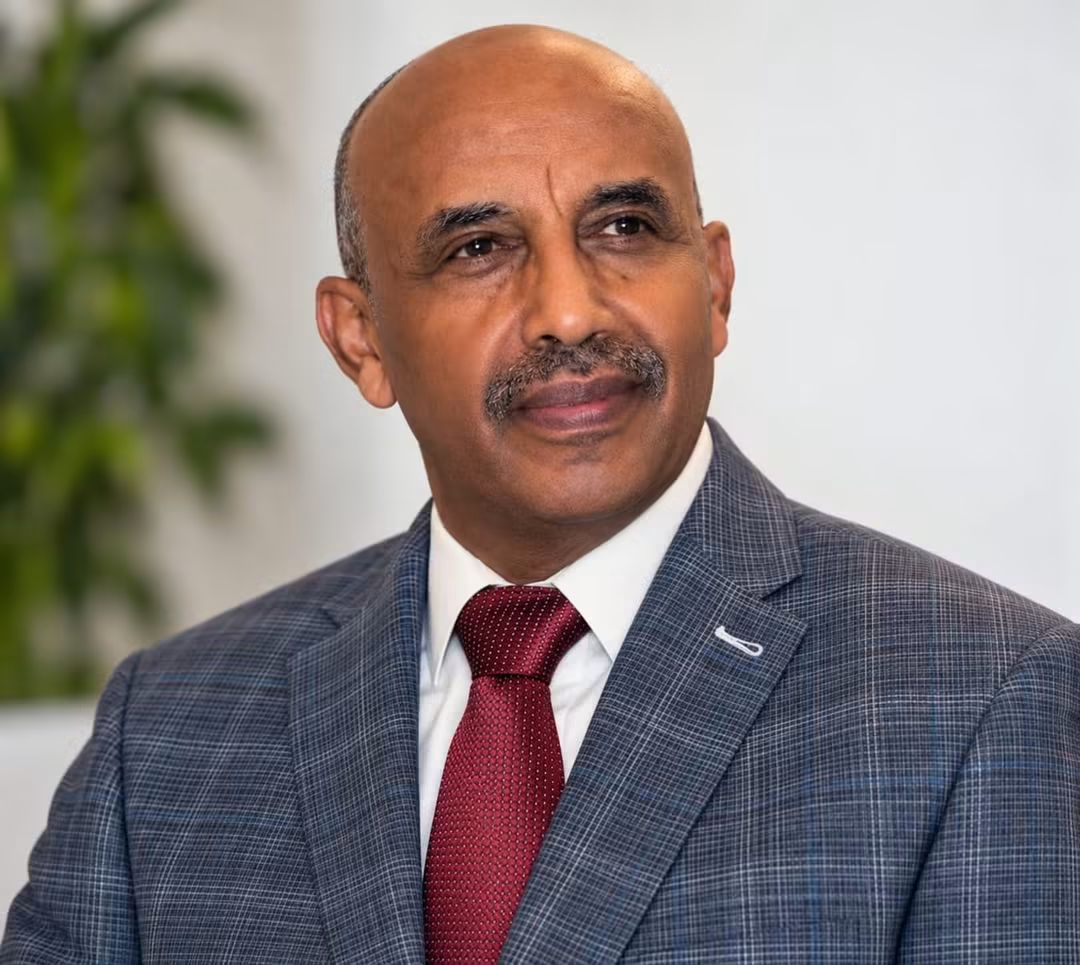
In a scene rich with symbolism, Eritrean Ambassador Sofia Tesfamariam appeared before the UN Human Rights Council in Geneva, defending—calmly and diplomatically—a regime accused of crimes against humanity. Opposite her, UN Special Rapporteur Dr. Mohamed Abdelsalam Babiker presented a report detailing the fate of detainees who have been forcibly disappeared for twenty-five years, young people fleeing a national service system that has become an open-air prison, and a judiciary entirely subordinate to the ruling authorities.
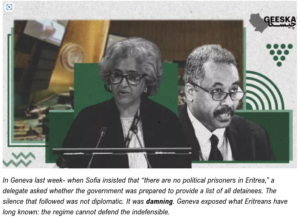
Between these two narratives lies a gulf that no diplomatic protocol or official denial can bridge. The issue is not the absence of defenders for the regime, but the absence of any real change on the ground that could lend credibility to such a defense. The confrontation raises a deeper question: not only why the Eritrean regime has failed to resolve this file, but why the international community has allowed this failure to persist for decades—as if time were working in favor of the perpetrators rather than the victims.
This year’s Human Rights Council session was not routine. It marked a significant political moment in the long-strained relationship between the Eritrean government and UN human rights mechanisms. For the first time, there was a direct, public confrontation between the Eritrean ambassador and the Special Rapporteur—an encounter with political implications that went far beyond the usual debate over Eritrea’s human rights record. Through this direct engagement, Asmara sought to signal that it is capable of defending its position before the international community and has moved from boycotts and written rebuttals to a new phase of interactive diplomacy.
For years, the Eritrean regime has relied on a consistent strategy: rejecting UN reports, questioning their credibility, and accusing them of bias and politicization. Meanwhile, UN bodies and international human rights organizations have continued to document grave, ongoing violations—arbitrary detention, enforced disappearance, lack of judicial independence, and the continuation of indefinite national service.
What was new this time was not the accusations or the responses, but the ambassador’s decision to personally take the lead. Her presence was intended to project confidence and to suggest that Eritrea is ready to defend itself face-to-face. Yet the session made clear that the core problem is not the lack of a defender, but the lack of facts that could convince the international community that the human rights situation in Eritrea has genuinely changed. In such matters, the world does not judge by rhetoric or diplomatic skill, but by concrete indicators on the ground.
Those indicators remain unchanged. Thousands of political prisoners and prisoners of conscience—including former ministers, military commanders, journalists, and religious leaders—remain unaccounted for. The case of the G-15 reformists and the journalists detained since 2001 remains one of the darkest chapters in the regime’s record. Meanwhile, indefinite national service continues to push large numbers of young Eritreans into forced migration, with no political or legal horizon guaranteeing basic rights and freedoms. The authorities have shown no willingness to cooperate with the Special Rapporteur or to allow independent access to verify conditions inside the country.
This explains why international pressure continues despite Asmara’s diplomatic efforts. The issue is no longer about annual reports or temporary political positions; it has become a fundamental question of accountability, justice, and the rights of Eritrean citizens themselves.
These developments are especially significant because they come a decade after the UN Commission of Inquiry concluded that there were reasonable grounds to believe crimes against humanity had been committed in Eritrea. Yet in the ten years since, the Eritrean authorities have failed to address international concerns or implement meaningful reforms. Most of the issues raised by the Commission remain unresolved.
For this reason, the confrontation in Geneva cannot be considered a diplomatic victory for any side. Instead, it revealed that the Eritrean regime remains unable to convince the international community that the human rights crisis is behind it. It also showed that appeals to sovereignty alone are no longer sufficient in a world where human rights have become integral to international relations.
Most importantly, the session highlighted a shift in the global conversation about Eritrea. After years of focusing on documenting violations, the discourse is increasingly turning toward accountability and ending impunity. This shift is not merely rhetorical; it carries deep political and legal implications, reflecting a growing conviction among states and human rights organizations that the status quo is no longer acceptable and that resolving the crisis requires more than periodic reports.
For decades, Asmara has relied on time, denial, and obstruction to manage its standoff with international institutions. But the Geneva session demonstrated that this approach has failed to convince the world or to remove the underlying causes that keep Eritrea’s human rights file open year after year.
Nothing in Geneva changed the essence of the Eritrean crisis. The regime continues to repeat the language of sovereignty and conspiracy, the international community continues to express concern and call for reform, and the Eritrean citizen remains the only party paying the price of this prolonged stalemate.
The past decade has shown that time does not resolve crises, and ignoring violations does not make them disappear. The question now is not whether abuses continue, but how long the world will remain content with documenting them without taking steps to stop them.
In Geneva, Sofia Tesfamariam defended the regime with all the tools of diplomacy, and Mohamed Abdelsalam Babiker defended the victims with all the tools available to the UN. But the truth that emerged clearly is that justice remains absent, and Eritrea’s human rights file has become a test of the credibility of the international system itself.
The real question emerging from Geneva is whether the international community is finally prepared to move from managing the crisis to addressing it. History does not remember how many reports were written; it remembers whether those reports changed the fate of the people for whom they were written.