
 admin
admin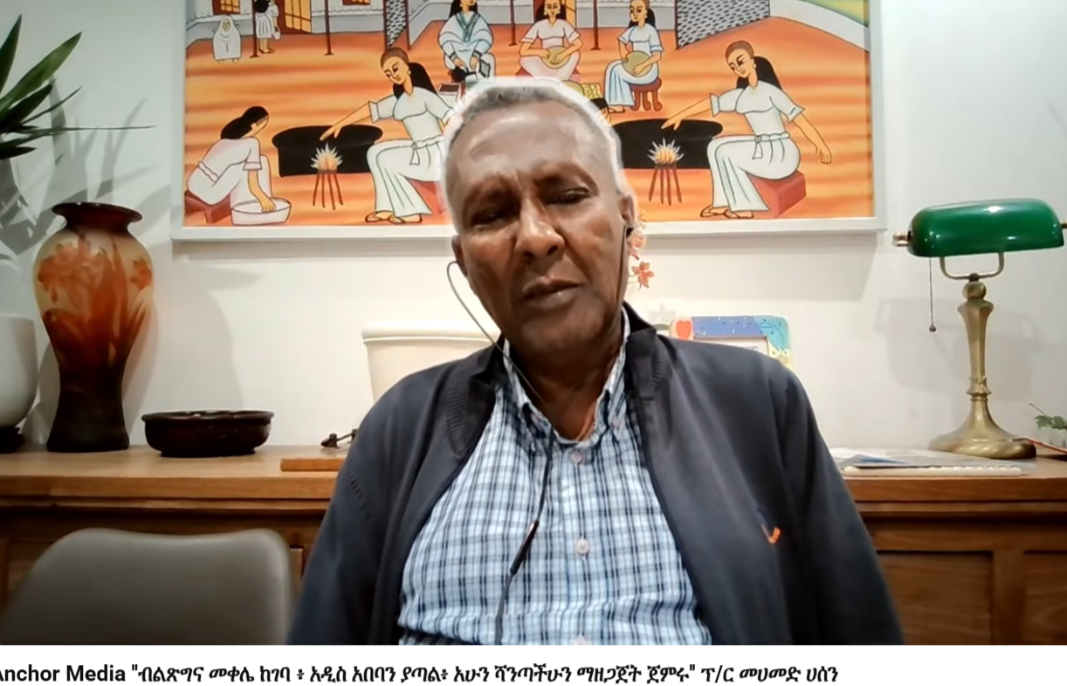
ANFET Editorial – September 29, 2026
The Educational Value of Professor Mohamed Hassan’s Analysis for Eritrean Readers
Source: Anchor Media – Interview with Professor Mohamed Hassan (“Professor Mohamed Hassan’s recent interview offers substantial educational value for Eritrean readers…”)
Professor Mohamed Hassan’s interview provides Eritrean readers, civic actors, and students of political science with a rich educational lens through which to understand the evolving political landscape of the Horn of Africa. His insights illuminate how states become vulnerable, how regional dynamics shape national stability, and how internal governance failures expose a country to external pressures. ANFET views his analysis not as political mobilization, but as a teaching resource for anyone seeking clarity in a region undergoing rapid and consequential change.
Hassan begins by offering a clear framework for understanding state fragility. He explains that internal contradictions—ethnic polarization, contested legitimacy, and institutional erosion—gradually weaken a government’s ability to govern effectively. As the document notes, “Political fragmentation undermines national cohesion… Public distrust erodes institutional authority… Unresolved grievances accumulate into structural weakness.” These observations help Eritrean readers recognize how internal dynamics shape national stability and why governance failures often precede broader crises.

He then turns to the role of external actors, emphasizing that foreign governments and regional powers intervene most aggressively when a state shows internal weakness. Through economic leverage, security partnerships, and diplomatic pressure, external actors shape outcomes in vulnerable countries. This lesson is foundational for Eritreans seeking to understand how geopolitical influence operates and why weak states attract intervention. Hassan’s analysis clarifies that regional competition does not occur in isolation; it interacts directly with domestic political conditions.
Hassan situates Ethiopia’s crisis within the broader strategic competition over the Red Sea, Bab el-Mandeb, ports, and mineral resources. By doing so, he helps Eritrean readers appreciate the geopolitical value of the Horn of Africa. The region attracts global interest not only because of its location, but because maritime routes and mineral corridors shape political and economic priorities for powerful states. His explanation allows Eritreans to see their region as part of a global strategic network rather than an isolated political arena.
One of Hassan’s most important contributions is his explanation of how internal governance failures create openings for external influence. When a state cannot manage its own contradictions, external actors step in—not necessarily to stabilize, but to shape outcomes. As the document states, “strong institutions protect sovereignty… political fragmentation increases exposure… domestic governance directly affects foreign policy vulnerability.” These are essential lessons in political science and statecraft, and they help Eritrean readers understand why internal strength is the first line of defense against external pressure.
Finally, Hassan’s analysis encourages Eritrean readers to think critically about regional interdependence, the consequences of instability, and the importance of internal cohesion for national sovereignty. His interview is valuable because it educates, not because it predicts outcomes. It helps Eritreans understand the structural forces shaping the Horn of Africa and prepares them to analyze regional developments with clarity and depth.
In conclusion, ANFET views Professor Mohamed Hassan’s interview as a teaching tool. It offers Eritrean readers a chance to learn how states become vulnerable, how regional dynamics evolve, and how internal governance shapes external exposure. Its value lies in education—in helping Eritreans understand the political realities of the region with accuracy, context, and intellectual rigor.