
 admin
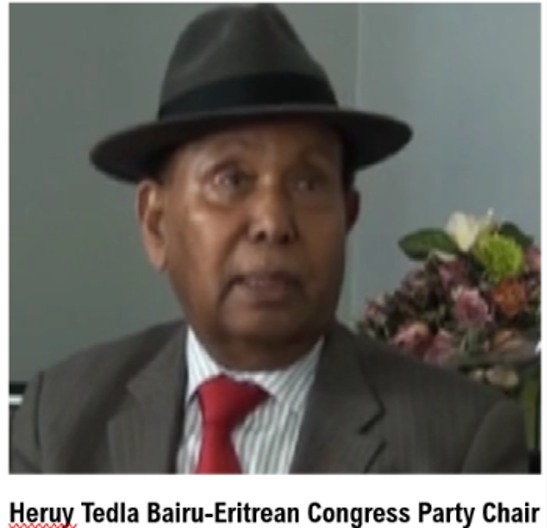
ANFET Editorial Statement on the SBS Amharic Interview with Ato Hiruy Bairu
October 20, 2026
ANFET issues this extended editorial in response to the SBS Amharic interview with Hiruy Bairu. Our intention is not to diminish Hiruy’s long record of civic engagement, nor to dismiss the valuable insights he offered regarding corruption and democratic renewal. Rather, our aim is to clarify the constitutional, historical, and diplomatic principles that must guide any discussion involving Eritrea, Ethiopia, Afar territory, and the governance of ports and maritime sovereignty.
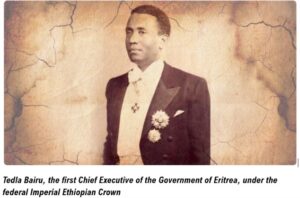
ANFET recognizes Hiruy Bairu’s contributions to public discourse and his persistent advocacy for clean governance. His insistence that corruption must be uprooted before democracy can flourish is a principle deeply rooted in Eritrean political history. The example of Dejazmach Tedla Bairu- Hiruy’s father and the first chief executive of Eritrea- stands as a testament to this truth. Tedla Bairu’s tenure was marked by disciplined constitutionalism and a refusal to allow imperial overreach. His decision to forbid the emperor’s representative from traveling to Anseba without his office’s authorization was not an act of defiance but a defense of Eritrea’s federated autonomy. He understood that corruption and constitutional erosion are twin threats to democratic governance. He later summoned the people at Cinema Capitol and resigned with dignity and integrity. In this respect, Hiruy’s emphasis on anti‑corruption aligns with ANFET’s institutional values.
Yet ANFET finds that several of Hiruy’s conclusions in the SBS interview require careful evaluation. In the context of an impending war between Eritrea and Ethiopia, the proposition of invading Eritrea, occupying Asmara, and drafting a constitution aligned with the occupying forces- as stipulated by the Samara Conference of 2025- combined with the suggestion of Ethiopia/Eritrea/Afar tripartite negotiations and a ninety‑nine‑year treaty without a constitutional government or constitutional mandate, reflects a fundamental conflict with constitutional sovereignty, indigenous rights, and international norms.
Port Authority is not an ethnic mandate- it is a national sphere. Maritime security, naval protection, and foreign diplomacy are inherently state functions. They cannot be devolved to ethnic groups, nor can they be negotiated away in century‑long treaties with corporations or commercial entities that disregard constitutional sovereignty.
Furthermore, ANFET cautions against the characterization of Prime Minister Abiy Ahmed as a “strategic thinker” in the context of port access. The record suggests that his approach was heavily influenced by President Isaias Afwerki’s geopolitical calculus rather than by a coherent Ethiopian maritime strategy. To elevate this as strategic foresight risks legitimizing a pattern of decision‑making that bypassed constitutional processes, ignored indigenous rights, and destabilized regional relations. Eritrea is currently under attack, and the priority must be the implementation of the Algiers Agreement of 2000 and the 2018 rapprochement framework. Only after the border is demarcated and peace restored can Eritrea and Ethiopia enter a new era of cooperation grounded in law rather than improvisation.
The path forward requires a constitutional settlement inside Eritrea itself. Eritrea’s future stability depends on a social contract among its eight or nine provinces, recognizing the diversity of its ethnic groups while decentralizing power to regional administrations. Municipal and Adi governance must be placed under the authority of the people. Port Authority, however, must remain a national sphere. The state alone must hold the mandate for maritime governance, naval protection, and foreign diplomacy. These functions cannot be fragmented without endangering national sovereignty.
Hiruy’s suggestion that Ethiopia and Eritrea could negotiate a ninety‑nine‑year arrangement over Eritrean territory through a tripartite negotiation framework involving Afar Eritreans introduces a divisive element among Eritreans who do not have a mutually agreed‑upon constitution mandating such a proposition. Moreover, such an idea cannot be entertained after the Afar Samara Conference of 2025, which outlined a coordinated military plan involving Ethiopian forces to occupy Asmara and draft a constitution aligning Eritrea with Ethiopian occupation. The nation is in a defensive posture against a hostile takeover by neighboring Ethiopia determined to acquire access to the sea by any means possible- as widely described in regional commentary as “Bole or Balie,” meaning by diplomacy or by force.
Eritrea’s crisis will not be solved by maritime bargains or century‑long treaties. It will be solved by restoring legality: the Algiers border demarcation, a constitutional settlement among Eritrea’s provinces, and a national framework that places Port Authority, defense, and foreign diplomacy firmly under the state. Only then can Eritrea and Ethiopia negotiate equitable, lawful, and sustainable cooperation. Eritrea is the land of the Afaris and all Eritreans, and its sovereignty cannot be reshaped by external pressure or by agreements that bypass the people whose land is at stake. Any body that negotiates with foreign entities on behalf of Eritrea must be a legally mandated constitutional representative, not an amalgamation of defined communities assembled to satisfy ambitious forces.
ANFET therefore affirms that any future arrangement between Ethiopia and Eritrea must be grounded in constitutional order and international law. The unity of the Eritrean opposition, the restoration of legality, and the recognition of Eritrea’s diverse provincial communities must precede any discussion of port access or maritime cooperation. Only through such a principled approach- a mutually agreed‑upon binding constitutional order and democratic rule- can Eritrea secure peace, sovereignty, and a democratic future. Let Eritrea first become Eritreans’ own before moving on to discussions of borders and access to the sea.