
 admin
admin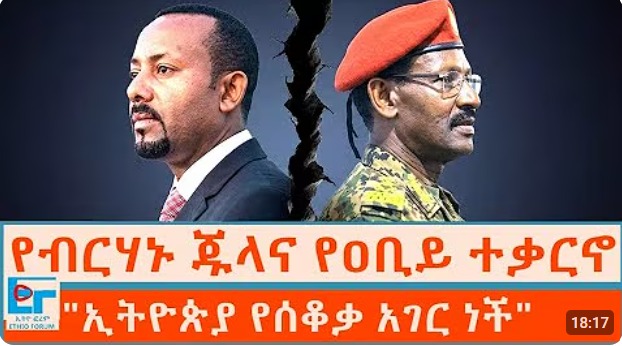
Ethiopia’s Field Marshal Admits Failure- Eritrea’s Field Commanders Must Push for Transition, Not War
ANFET Editorial – July 7, 2026
Field Marshal Berhanu Jula’s remarks today landed with the weight of a political earthquake across Ethiopia. His admission that the state is failing in “all aspects of life” is not a routine military statement; it is a moment of reckoning. For the first time, Ethiopia’s highest-ranking military officer has publicly acknowledged the depth of the country’s crisis- a fractured federation, a battered economy, a security architecture overwhelmed by insurgencies, and a government struggling to maintain legitimacy. His words reflect a nation in freefall, a government losing its grip, and a population losing hope. They also carry implications far beyond Ethiopia’s borders.
Eritrea, though silent, stands in a parallel moment of crisis. Its Field Commanders, though not speaking publicly, are fully aware of the country’s political stagnation, economic suffocation, mass exodus, and diplomatic isolation. Eritrea’s military leadership knows that the current trajectory is unsustainable. They also know that any involvement in Ethiopia’s internal turmoil- whether through alliances, covert operations, or political manipulation- would drag Eritrea into a catastrophe it cannot afford. The Horn of Africa is entering a dangerous phase, and the decisions made by military leaders in both countries will determine whether the region moves toward transition or toward destruction.
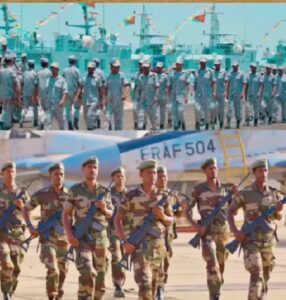

This is precisely why Eritrea’s Field Commanders must choose the path of restraint and national responsibility. The moment demands leadership that protects the people, not the regime; leadership that recognizes that the era of authoritarian permanence is ending; leadership that understands that the only viable future for Eritrea is a peaceful, orderly transition to a new political dispensation. The Field Marshal’s admission in Ethiopia should serve as a mirror for Eritrea’s military establishment. Both countries are facing structural collapse. Both countries are exhausted by war, repression, and political paralysis. And both countries need military statesmen, not military adventurists.
In this volatile environment, the Eritrean Afar National Congress (EANC) must exercise extreme caution. Ethiopia’s political landscape is shifting rapidly, and Abiy Ahmed’s government is entering a phase of dangerous instability. When a regime weakens, it often seeks external alliances or proxy actors to stabilize its internal collapse. EANC must not be drawn into this trap. Any drastic action inside Ethiopia, any involvement in Abiy’s internal power struggle, would endanger Afar civilians, destabilize Dankalia, invite retaliation, and undermine Eritrean sovereignty. It would also destroy the credibility of Afar political movements and expose them to regional manipulation. EANC must reconsider its resolutions and avoid being used as a pawn in Ethiopia’s domestic turmoil.
The Eritrean opposition, too, must recognize the urgency of the moment. The time for fragmentation, endless debates, and organizational rivalries is over. The region is shifting, the regimes are weakening, and Eritrea cannot afford disunity. The opposition must accelerate unity, form a single national platform, and reach out to Eritrean Field Commanders with a credible transitional roadmap. International partners will only engage seriously with a unified Eritrean voice. Eritrea’s future will not be shaped by external actors; it will be shaped by Eritreans- civilians, political leaders, and military commanders- acting together.
The Horn of Africa stands at a historic crossroads. Two Field Marshals- one speaking openly, one remaining silent- represent two nations facing the same existential question: will the military defend the people, or defend the collapse? The responsible path is clear. No war. No cross-border manipulation. No proxy conflicts. No opportunistic alliances. Instead, transitional governments, national dialogue, regional stability, civil–military cooperation, and peaceful political change. This is the moment for military leaders in both countries to rise above personal loyalties and political pressures and act as guardians of national survival.
Ethiopia’s admission of failure is not a sign of weakness; it is a sign of truth. Eritrea’s silent crisis is not a sign of stability; it is a sign of urgency. The Horn of Africa does not need another war. It needs leadership- civilian and military- that chooses transition over destruction. EANC must reconsider its resolutions. Eritrean opposition forces must unite. Eritrean Field Commanders must engage. Ethiopia’s military must prioritize peace. And both nations must choose a future that protects their people, not their regimes. This is the hour for wisdom.