
 admin
admin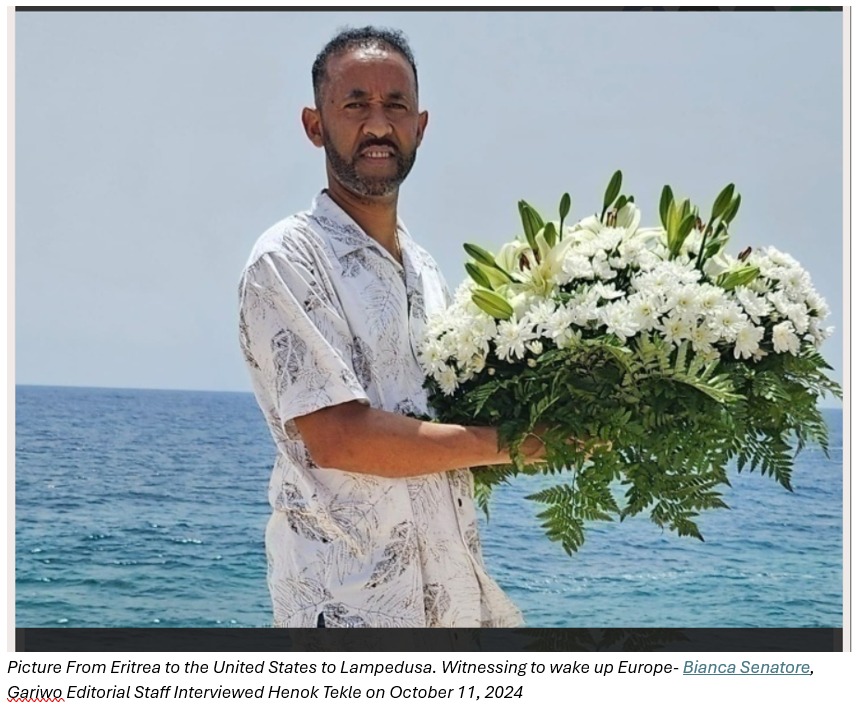
The Campaign Against Henok Tekle: When Opposition Voices Begin to Sound Like the Regime
ANFET EDITORIAL-June 10, 2026
In the global Eritrean struggle for justice, few figures have emerged with the clarity and credibility of journalist and activist Henok Tekle. His journey- from detention in Eritrea to a 14-country escape, from witnessing the horrors of migration routes to documenting the testimonies of survivors- has made him one of the most trusted narrators of Eritrean suffering and resilience. Yet it is precisely this credibility that has placed him at the center of a troubling trend: a wave of attacks not only from the Eritrean regime, but from individuals who claim to be part of the opposition.
The contrast between his work and the accusations leveled against him could not be sharper. In 2024, Henok organized a public GoFundMe campaign that raised more than $250,000, a figure unmatched by any other Eritrean opposition media initiative in recent memory. The purpose of the fundraiser was transparent: to support ERIPM’s broadcasting and documentation work. The community responded with overwhelming trust. Fundraising at this scale is not an accident; it is the result of years of consistent work, public accountability, and moral credibility.
The Eritrean regime’s reaction was predictable. Henok was placed at the top of a list of politically motivated federal charges, accused of “disrupting a festival” and causing “material loss”- allegations widely recognized as part of the regime’s transnational propaganda strategy. When an authoritarian state identifies someone as a threat, it is because that person has become effective.
What is far less predictable- far more revealing- is the behavior of certain self-described opposition voices who have chosen to echo the regime’s narrative. Their criticisms are rarely grounded in evidence. Instead, they rely on rumors, exaggeration, and personal resentment. Minor editorial errors are inflated into moral indictments. Unverified claims are repeated as fact. The pattern is unmistakable: individuals who have built nothing feel entitled to tear down someone who has built something meaningful.
This dynamic becomes even more troubling when placed against the backdrop of Tekle’s own testimony. His life story is not one of comfort or convenience. It is the story of a young political editor detained during the 2001 student crackdown; of a husband whose pregnant wife was imprisoned in retaliation for his escape; of a refugee who crossed deserts, jungles, and borders to survive; of a witness who has listened to thousands of Eritrean stories of drowning, trafficking, torture, and disappearance. His work is not theoretical. It is lived.
To attack such a figure without evidence is not political critique- it is political malpractice.
A serious opposition recognizes its assets. It understands that fundraising capacity is not a threat but a lifeline. It knows that journalists who mobilize communities should be supported, not sabotaged. It distinguishes between constructive accountability and destructive mimicry of the regime’s tactics. And it asks a simple, unavoidable question: If the dictatorship fears Henok Tekle, why would anyone claiming to oppose that dictatorship choose to attack him?
The answer to that question will determine whether the Eritrean diaspora builds a movement capable of confronting authoritarianism- or continues to fracture under the weight of its own distractions.
The struggle has enough enemies. It does not need to manufacture new ones from within.