
 admin
admin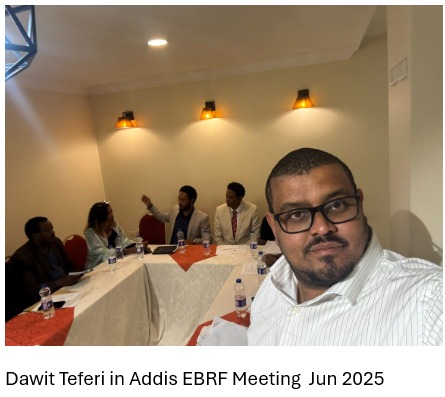
ANFET EDITORIAL
Dawit Teferi Must Stand for a Sovereign Eritrea Before Entertaining Ethiopian Ambitions for Red Sea Access
August 11, 2026
Interview Referenced: https://www.youtube.com/watch?v=olLONrEURdA
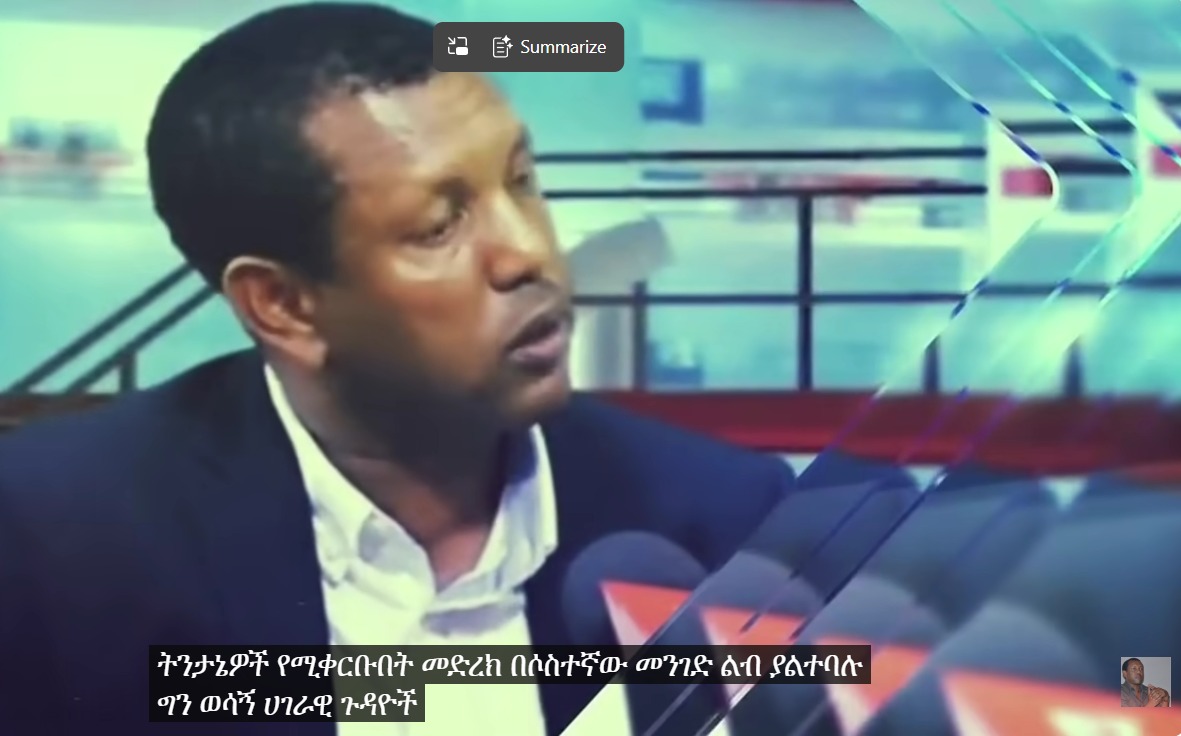
There are moments when political discourse stops being a debate and becomes a test of national instinct. The recent interview of Dawit Teferi on Ethiopian Broadcasting Corporation is one such moment. It is not simply an interview. It is a mirror- and what it reflects is a crisis of Eritrean political clarity.
In that broadcast, Dawit Teferi did not speak as an Eritrean defending his nation’s sovereignty. He spoke as a political accessory to Ethiopia’s maritime ambitions. He framed Ethiopia’s desire for Red Sea access as a reasonable discussion, a matter of “benefit,” a question of “win-win solutions.” He even went so far as to declare that Eritreans “failed Ethiopia.” It is difficult to imagine a more revealing sentence. It is the language of someone who has forgotten the meaning of independence.

But the most telling moment came not from Dawit himself, but from the interviewer -when he invoked Prime Minister Abiy Ahmed’s “Medemer” philosophy. The question was framed as though “Medemer” were a regional doctrine, a shared vision, a unifying principle that Eritrea somehow failed to embrace. It was a subtle but deliberate attempt to re-open the political atmosphere of 2018, the so-called honeymoon period when Eritrea was treated not as a sovereign state, but as an extension of Ethiopia’s political experiment.
During that period, Abiy Ahmed was welcomed into Eritrea with a level of access unprecedented in the region. He was given symbolic keys to cities, ports, and institutions- gestures that resembled mayoral exchanges rather than diplomatic protocol. It was a moment of political euphoria, but also a moment of strategic miscalculation. “Medemer” was never an Eritrean philosophy. It was never a regional doctrine. It was a domestic Ethiopian political slogan exported across borders during a temporary political thaw. It had nothing to do with Eritrea’s history, identity, or national interests. And yet, its residue still haunts Eritrea to this day.
The interviewer’s question was not innocent. It was an attempt to revive the narrative that Eritrea should align itself with Ethiopia’s ideological frameworks, that Eritrea should see its sovereignty through the lens of Ethiopian political philosophy, that Eritrea should be part of a “Medemer” region rather than an independent nation. It was an attempt to re-normalize the idea that Eritrea’s ports, cities, and strategic assets are part of a shared Ethiopian-Eritrean destiny- a narrative that directly undermines Eritrea’s territorial integrity.
Dawit Teferi did not challenge this framing. He did not reject the premise. He did not defend Eritrea’s sovereignty. Instead, he allowed the interviewer’s narrative to stand, unchallenged and uncorrected. And in doing so, he confirmed everything this editorial desk has warned about: opposition figures who speak as though Eritrea’s independence is negotiable, who treat Ethiopian ambitions as legitimate, who normalize foreign claims under the guise of “philosophy,” “cooperation,” or “win-win outcomes.”
Eritrea did not fail Ethiopia. Eritrea liberated itself from Ethiopia. Eritrea paid for its sovereignty with blood, sacrifice, and a generation’s worth of suffering. To reinterpret that history as a failure toward Ethiopia- or to frame Eritrea’s independence through the lens of “Medemer”- is not analysis. It is political surrender.
Eritrea’s sovereignty is not a bargaining chip. It is not a philosophical experiment. It is not a regional slogan. It is not a topic for polite negotiation on Ethiopian state media. The Red Sea is not a shared inheritance. It is Eritrean territory. It is Eritrean history. It is Eritrean identity. Any Eritrean political actor who speaks of Ethiopian “access” without first affirming Eritrea’s absolute sovereignty is not engaging in diplomacy- they are eroding the foundations of the nation.
The ANFET editorial desk has consistently argued that opposition figures who justify Ethiopia’s Red Sea narrative are playing with fire. Dawit Teferi has now provided the clearest example. His interview confirms the normalization of foreign claims, the softening of existential threats, the transformation of sovereignty into a discussion topic, and the dangerous illusion that Eritrea owes Ethiopia a maritime solution= or a philosophical alignment.
Eritrea owes Ethiopia nothing.
What Eritrea owes itself is clarity, unity, and an uncompromising defense of its independence. Any Eritrean who speaks on Ethiopian media must begin with one principle: Eritrea is sovereign, independent, and inviolable. Only after that principle is affirmed= clearly, loudly, and without apology= can any discussion of regional cooperation take place.
Dawit Teferi did not begin with sovereignty. He began with justification. He began with apology. He began with the language of accommodation. And in doing so, he crossed the line between political engagement and political abandonment.
Eritrea’s independence is not a failure. It is a triumph. It is not a burden. It is a legacy. It is not negotiable. It is absolute. Any Eritrean who speaks otherwise is not defending the nation. They are weakening it.