
 admin
admin
Eritrea’s Sovereignty Is Not a Misunderstanding: A Response to Dawit Teferi’s Revisionist Narrative on EBC
Interview Referenced:
ANFET EDITORIAL-August 11, 2026
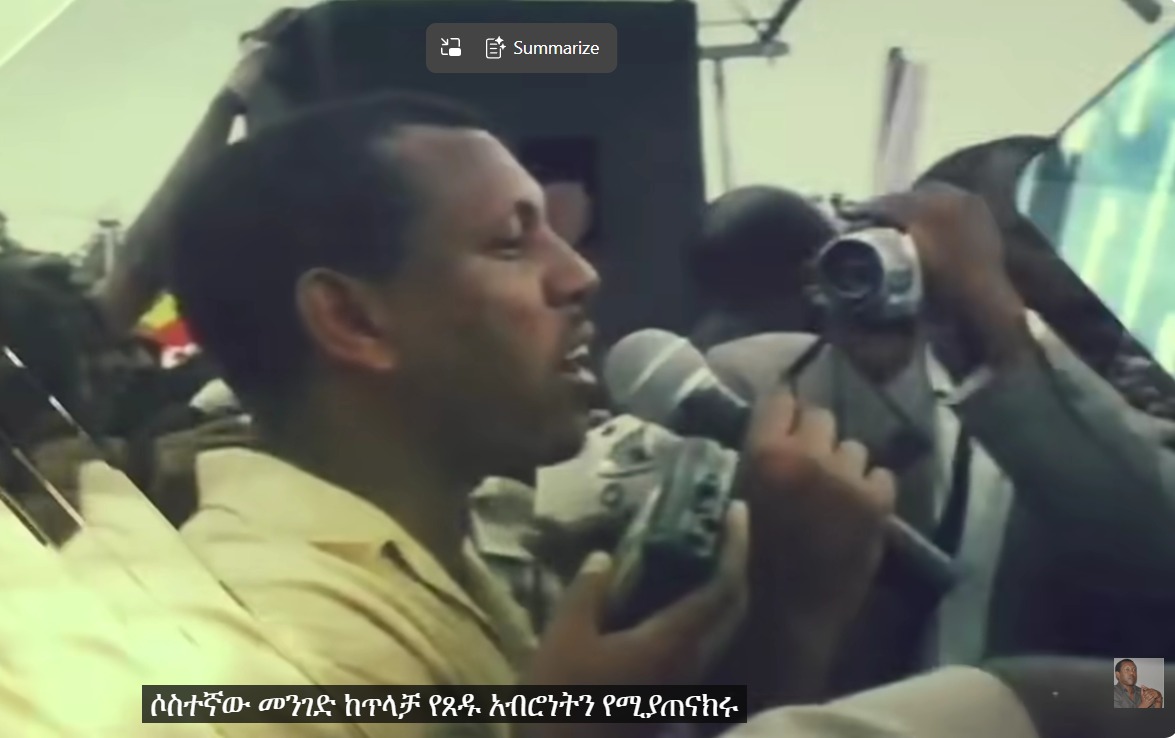
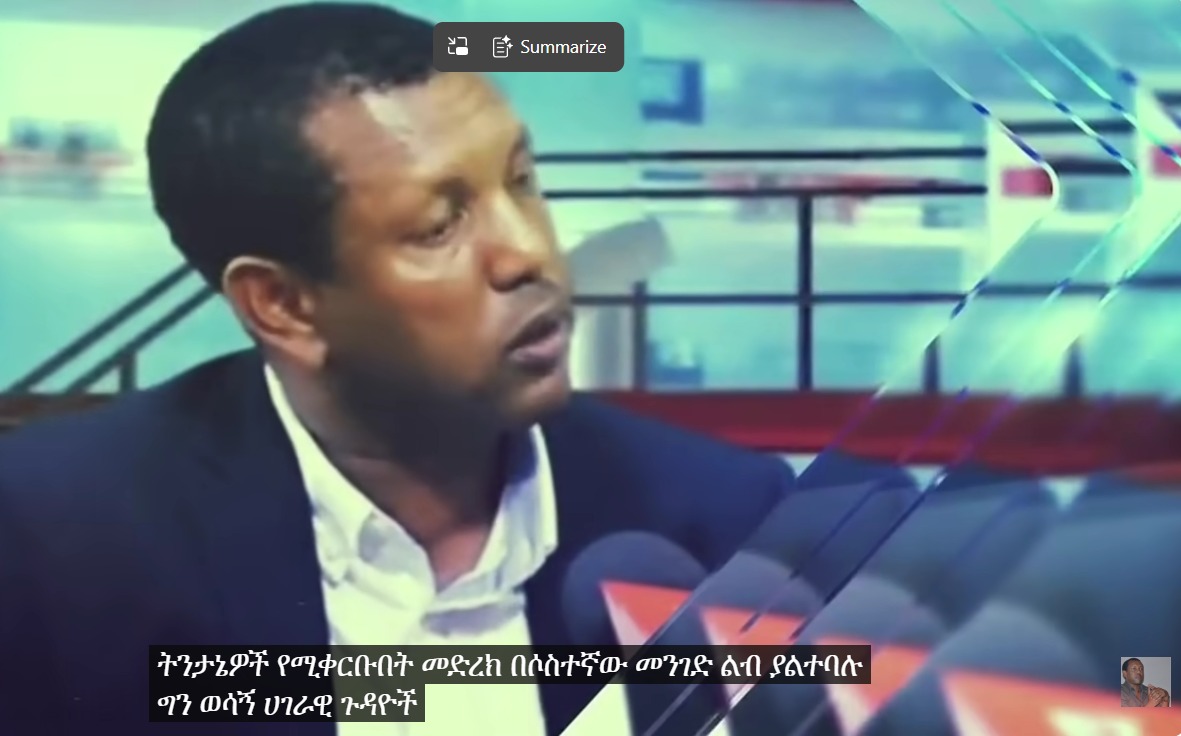
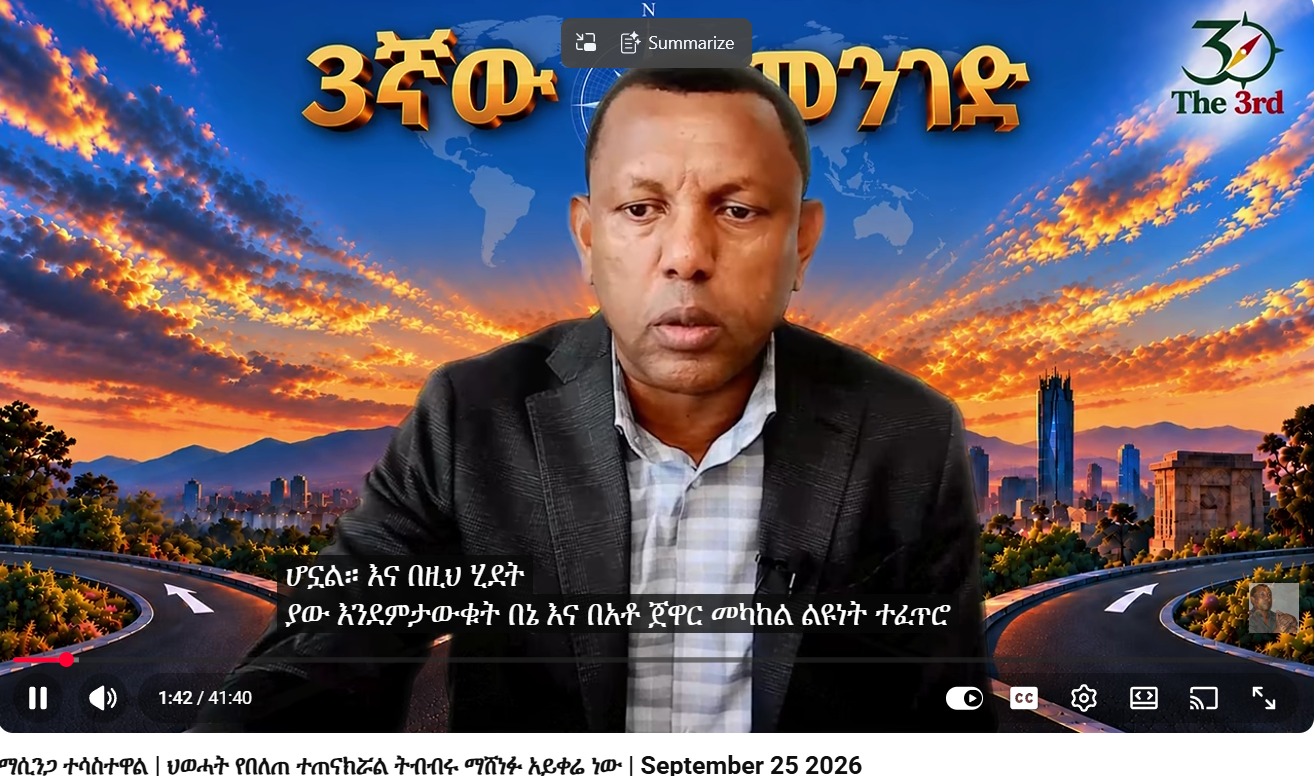
There are interviews that reveal confusion, and there are interviews that reveal intent. The latest appearance of Dawit Teferi on Ethiopian Broadcasting Corporation belongs to the second category. It is not merely a misguided conversation. It is a deliberate attempt to rewrite Eritrean history, dilute Eritrean identity, and recast the Eritrean liberation struggle as a mistake born of “misinformation.” It is a narrative that seeks to fold Eritrea back into an imagined “Habesha” or “Abyssinian” cultural unity- a unity that has historically served as a political cover for Ethiopian expansionism.
In this interview, Dawit Teferi does not simply question Eritrea’s sovereignty. He questions the legitimacy of the Eritrean revolution itself. He speaks as though the thirty-year struggle for independence was an emotional misunderstanding, a tragic detour, a rebellion against cultural kinship rather than a response to annexation, occupation, and systematic denial of national rights. He frames Eritrea’s liberation as a rupture in “Habesha unity,” rather than the continuation of a historical trajectory shaped by Italian colonization, British administration, UN federation, Ethiopian annexation, and decades of armed resistance.
This is not analysis. It is revisionism.

The Eritrean revolution did not emerge from confusion. It emerged from annexation. It emerged from the abrogation of the UN-mandated federation. It emerged from the dissolution of Eritrean institutions, the banning of Eritrean languages, the dismantling of Eritrean autonomy, and the imposition of Ethiopian rule by force. It emerged from the burning of villages, the imprisonment of intellectuals, the execution of political leaders, and the systematic attempt to erase Eritrea as a distinct national entity.
To describe this history as “misinformation” is to deny the lived experience of generations. It is to erase the martyrs. It is to trivialize the sacrifices of tens of thousands of Eritreans who fought not for cultural separation, but for political survival.
The interviewer’s framing is equally revealing. He presents Eritrea not as a sovereign nation, but as a cultural fragment of a larger Abyssinian whole. He invokes shared identity, shared heritage, shared blood- as though sovereignty were a sentimental misunderstanding rather than a legal, historical, and political reality. He speaks as though Eritrea’s independence were an anomaly that must be corrected through philosophical reconciliation, cultural reabsorption, or regional redefinition.
This is not journalism. It is political messaging.
It is the same narrative that has resurfaced repeatedly since 2018, during the so-called honeymoon period when Prime Minister Abiy Ahmed was welcomed into Eritrea with unprecedented access. It is the same narrative that accompanied the “Medemer” philosophy- a domestic Ethiopian slogan exported across borders and presented as a regional doctrine. It is the same narrative that treated Eritrea not as a sovereign state, but as a cultural extension of Ethiopia’s political imagination.
Dawit Teferi embraces this narrative without hesitation. He speaks of “Habesha unity” as though it were a political destiny. He speaks of Eritrea’s revolution as though it were a cultural betrayal. He speaks of independence as though it were a historical accident. And in doing so, he confirms the very danger this editorial desk has warned about: Eritrean opposition figures who adopt Ethiopian ideological frameworks, normalize Ethiopian territorial narratives, and undermine Eritrea’s sovereignty under the guise of cultural philosophy.
Eritrea’s independence is not a cultural deviation. It is a political fact. It is a legal fact. It is a historical fact. It is the result of a century-long trajectory shaped by colonization, federation, annexation, and armed struggle. It is the result of deliberate choices made by Eritreans who refused to be absorbed, erased, or redefined. It is the result of a revolution that was not spontaneous, not emotional, and not misinformed- but strategic, organized, and historically grounded.
Eritrea is not a fragment of a larger Abyssinian identity. Eritrea is a nation. Its sovereignty is not a misunderstanding. Its revolution is not a mistake. Its independence is not negotiable. Any Eritrean who speaks otherwise is not defending the nation. He is weakening it.
The ANFET editorial desk will continue to confront narratives that seek to dilute Eritrea’s identity, rewrite its history, or undermine its sovereignty. The interview of Dawit Teferi is not merely an intellectual error. It is a political warning. It is a reminder that the struggle for Eritrea’s dignity did not end with independence- and that the defense of Eritrea’s sovereignty requires vigilance, clarity, and unwavering commitment. Eritrea’s revolution was justified. Eritrea’s independence was earned. Eritrea’s sovereignty is absolute. And no interview- however polished, however philosophical, however revisionist- will change that.