
 admin
admin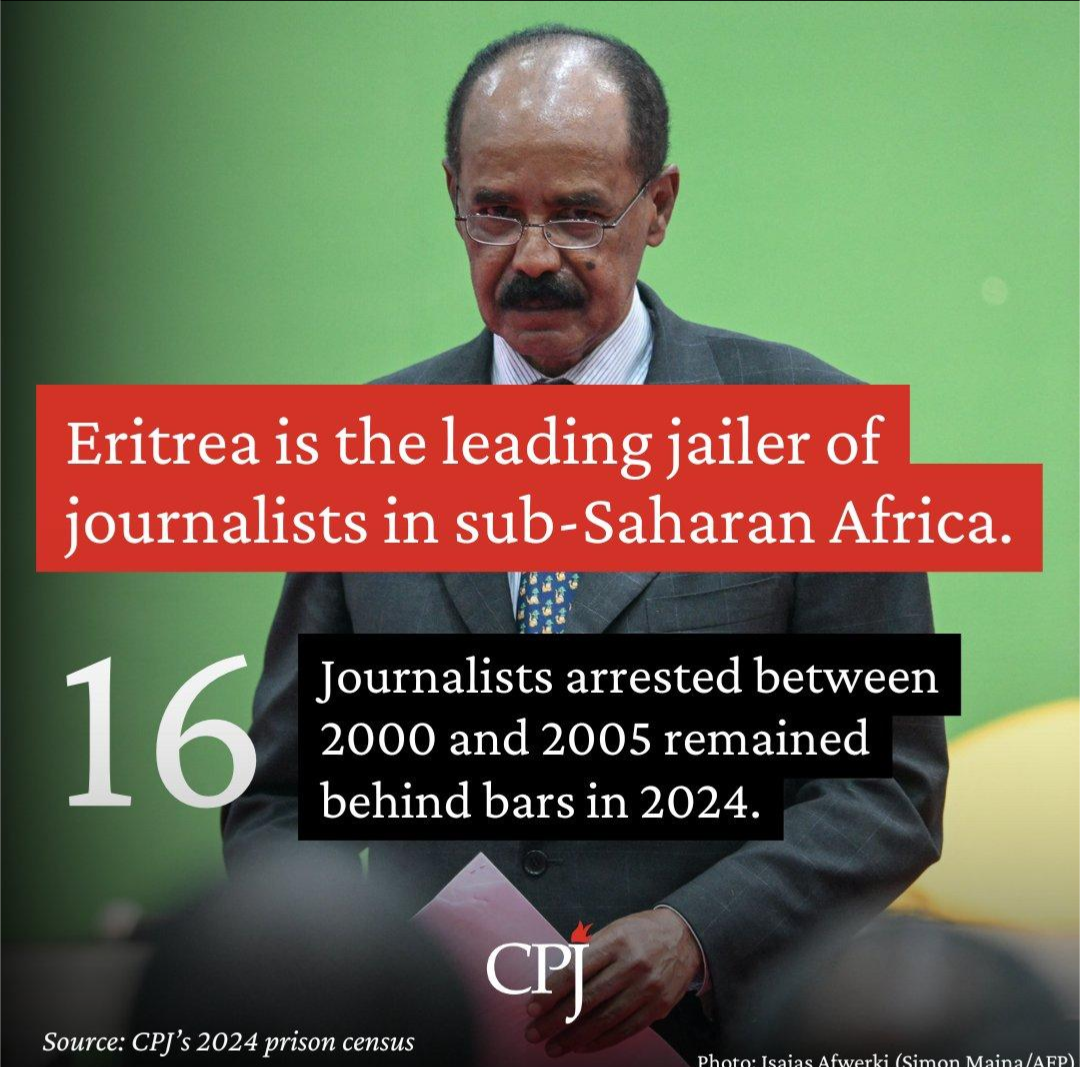
ANFET – Voice of the Eritrean Community
Editorial • 18 September 2026
Twenty-Five Years of Silence: The Disappeared Journalists and the Urgent Work of Clarity, Unity, and National Restoration
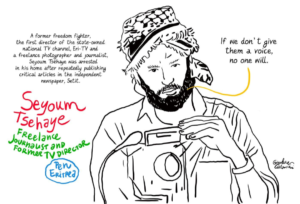
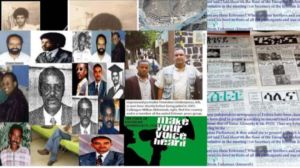
Twenty-five years have passed since the disappearance of Eritrea’s independent journalists on 18 September 2001. Their fate remains unknown—dead or alive, unacknowledged, unaccounted for, and unspoken by those who hold power. This anniversary is not merely a date; it is a stark reminder of the cost of silence, the fragility of civic life, and the deliberate confusion that has clouded the meaning of independence and freedom for a generation. As Eritrean communities around the world deepen their internal understanding, the significance of 24 May, 1 September, and now 18 September becomes clearer, sharper, and more inseparable.
The disappearance of the journalists was not an isolated act. It was a decisive moment in which the national conversation was forcibly halted, inquiry was criminalized, and the public record was placed under lock and key. It marked the beginning of an era in which independence was celebrated while freedom was withheld, and sovereignty was invoked while civic rights were suspended. The regime understood that when journalists vanish, truth vanishes with them. In the vacuum that follows, confusion becomes a political instrument, and ambiguity becomes a method of governance.
For decades, opponents of the Eritrean people’s right to self-determination—both internal and external—have relied on a strategy of deliberate blurring. Independence is portrayed as instability, sovereignty as isolation, and freedom as a privilege granted rather than a right exercised. The events of September 2001 were part of this strategy. They created a silence in which the meaning of 24 May 1991 and 1 September 1961 could be reshaped, diluted, or contested. Communities unable to name this confusion remain vulnerable to it. And silence in the face of manufactured ambiguity is itself a political act, one that strengthens those who benefit most from Eritrean fragmentation.

Clarity, therefore, is not a rhetorical exercise. It is a civic duty and a moral obligation. Independence is the unconditional right of the Eritrean people to govern themselves, free from colonial domination and imperial ambition. Sovereignty is the shield that protects that right from external manipulation. Freedom is the lived condition that the disappeared journalists defended with their pens, their voices, and ultimately their lives. To articulate these definitions openly, without apology or hesitation, is to reclaim the public record from those who seek to distort it.
Unity does not require uniformity. Eritrean communities commemorate national days in diverse ways—through cultural events in Stockholm and Melbourne, civic forums in Washington and Frankfurt, and quiet remembrance in Asmara. What binds these expressions is not a single ritual but a shared truth: independence was won, not granted; sovereignty is inherent, not conditional; and freedom is not negotiable. When communities root their commemorations in this truth, diversity becomes strength rather than fracture. The richness of Eritrean communal life is a heritage worth defending, not a vulnerability to exploit.
The legacy of the disappeared journalists is inseparable from this work. Their absence is a reminder that a divided people cannot defend its freedoms. Their silence is a warning that confusion is not accidental but engineered. Their memory is a call to end the fragmentation that has allowed ambiguity to flourish for twenty-five years. Today, Eritrean civic organizations, advocacy groups, veterans of the armed struggle, and younger generations born in the diaspora are finding common language. Platforms that once spoke into the void now speak to one another. This is not naïve reconciliation; it is the hard, practical labor of building a community that cannot be manipulated from outside nor fractured from within.
Yet the work remains unfinished. The confusion persists. The silence persists. The regime persists. And so must our unity. The anniversary of 18 September is not only a moment of remembrance; it is a moment of reckoning. It demands that Eritreans stop the endless debate that confuses independence with freedom. Independence has been achieved. Freedom has not. The task before us is not to reopen old arguments but to close the gap between the promise of independence and the reality of civic life. The disappeared journalists represent the cost of failing to do so. Their memory demands that Eritreans unite to restore the freedoms that were taken, to reclaim the public record, and to ensure that no generation inherits the silence of the last twenty-five years.
On this day, ANFET renews its commitment to clarity, unity, and truth. We honor the journalists who vanished. We honor all who sacrificed for Eritrea’s independence. We stand with every Eritrean who refuses silence. And we affirm that independence is not a date on a calendar but a covenant every generation must defend, safeguard, and pass forward with courage and conviction.
In remembrance of the martyrs. In solidarity with the disappeared. In service of the truth and the freedom yet to be restored.