
 admin
admin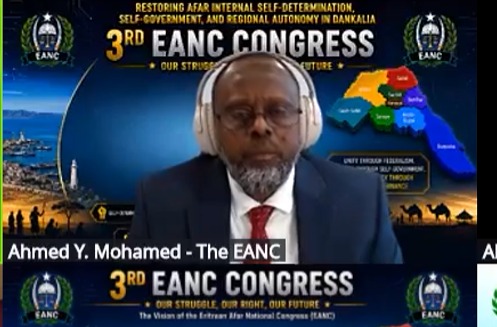
Reflection on the EANC Third Congress: Indigenous Cause, Misguided Advisors & Misaligned Solutions
ANFET-EDITOR
REPORTED by Hailemariam Tesfai
July 5, 2026
Four years ago, I attended the Eritrean Afar National Congress (EANC) in Ottawa Canada in solidarity with the Afar Eritrean cause- a struggle rooted in the pursuit of democracy, equality, justice, and the right to self-governance as an integral part of a sovereign Eritrea. At that time, the political landscape of the Horn of Africa was already complex, but the developments that followed would reshape alliances, expose vulnerabilities, and redefine the role of Afar Eritrean organizations within the broader national struggle.
The war between Tigray and neighboring states, intensified by the involvement of external actors such as the UAE, placed EANC and seven Eritrean organizations in a position of solidarity with the Tigrayan people. This alignment was not without confusion. Many Eritreans questioned the implications of supporting a regional force whose historical relationship with Eritrea had been fraught with tension. The Eritrean National Dialogue Forum eventually stepped in, inviting Ambassador Berhane Ghebre-Christos, representative of the Tigray Regional Administration, to clarify TPLF’s position on Eritrea’s sovereignty. His explanation- affirming Eritrea as a sovereign nation- brought temporary clarity and reassurance to the forum and its audience. The Pretoria Peace Agreement later concluded with the disarmament of the TDF and the withdrawal of armed Eritrean opposition groups from Tigray, closing a chapter that had entangled Eritrean political actors in the region’s conflict.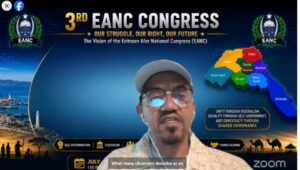
In December 2025, the Afar Nation Conference held in Samara introduced a new and unexpected political climate. The Revolutionary Front of Brigade N’Hamedu embraced the outcomes of the conference with such intensity that divisions quickly emerged within Eritrean Afar circles. These divisions surfaced in heated debates within the ANFET forum, revealing ideological fractures that had long been simmering beneath the surface. EANC’s participation in these discussions diminished, and for months the organization remained largely silent- until President Ahmed Yosuf publicly announced the upcoming Third EANC National Congress.
I received the invitation late, occupied with ANFET responsibilities and other organizational duties, but I confirmed my attendance as ANFET Editor and moderator of the ongoing national dialogue. President Ahmed welcomed the decision warmly, maintaining the optimism and good spirit that have long characterized his leadership.
The congress brought together a diverse group of distinguished guests. Colleagues from ENCDC were present, alongside independent opposition figures such as Abdurahman Sayed and Dr. Tedros Amanuel, both of whom delivered thoughtful presentations. Dr. Negassi Hadgu contributed a detailed vision for a decentralized, federated Eritrea. The EANC leadership- President Ahmed Yosuf Mohammed, Vice President Abdella Hamid, Sultan Ahmed Ahaw of Bidu, veteran ELF freedom fighter Ibadi Mohamed, and co-hosts including Chehem Abdalla- presided over the proceedings with dignity and enthusiasm, reflecting both the historical depth and contemporary relevance of Afar political engagement.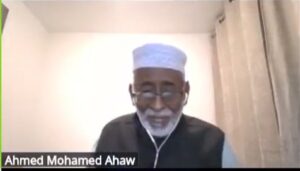
The keynote address, delivered by Professor Joseph Magnet, marked a turning point in the congress. Known as the father of the Afar Constitution, Professor Joseph presented a controversial vision of an autonomous Afar Eritrea integrated with Afar regions of Ethiopia and Djibouti. His PowerPoint map presentation raised immediate alarm. The map suggested a geopolitical redesign that could lead to military incursions into Eritrea, potential occupation of Asmara, and even the drafting of a new Eritrean constitution by external powers- a scenario reminiscent of post-World War II interventions in Japan and Germany. The debate over Ethiopia’s maritime access and the questioning of Eritrea’s sovereignty were not accidental; they reflected deeper regional ambitions and a willingness to redraw borders without regard for Eritrea’s hard-won independence. The map presented was, in essence, a reimagining of the Horn of Africa beyond recognition.
The appearance of Ato Getachew Reda, Senior Political Adviser to the Ethiopian Prime Minister, added another layer of complexity. His presence at EANC- an organization that once stood firmly with Tigray’s cause- symbolized a significant realignment. Research suggests that this shift coincides with the emergence of the Brigade N’Hamedu Samara Coalition and the so-called “Green Revolution,” an indigenous movement potentially backed by the same regional funds that fueled conflicts in Ethiopia and Sudan. His participation ended months of speculation about external influence in Afar political strategy and raised questions about the direction in which EANC was being guided.

Amid these developments, two voices stood out for their clarity and courage. Dr. Mohammed Abduselam Babiker offered a cautious but firm warning, noting that the proposed roadmap resembled the same formula that plunged Sudan into its current crisis. His remarks underscored the dangers of adopting externally designed solutions without considering their long-term consequences. Ato Abdurahman Sayed-Bohashem delivered a bold critique of the plan, defending Eritrean sovereignty and exposing the flaws in the geopolitical vision presented. Their interventions represented the true diplomatic and political voice of the Eritrean people- grounded in national interest, historical awareness, and a commitment to protecting Eritrea’s future.
At this critical juncture, it is essential to recognize the limits of external influence on Eritrea’s political trajectory. If Prime Minister Abiy Ahmed’s MoU with Somaliland- Ethiopia’s most ambitious attempt to secure maritime access- ultimately backfired and failed, then no external Ethiopian plan can penetrate Eritrean politics or reshape its sovereignty. The danger of fragmentation within Eritrean opposition circles is real, but the notion that Ethiopia could impose a political roadmap on Eritrea is even more unrealistic. Eritrea’s political destiny cannot be engineered from outside; it must be shaped by its own people, its own institutions, and its own united national vision. Only a united Eritrean opposition platform can counter the regime in Asmara and safeguard the nation’s future.
The question now confronting EANC is whether the organization can be salvaged from this externally designed roadmap. The answer lies with the people of Dankalia, the EANC leadership, and other Afar Eritrean organizations. Despite the turbulence, President Ahmed Yosuf remains optimistic, and elder Sultan Ahmed Ahaw- a respected indigenous leader and ELF veteran- continues to embody wisdom and hope for a principled course correction. His presence and perspective offered a reminder that indigenous leadership, rooted in historical legitimacy, remains essential to guiding Afar political movements in the right direction.
The warning signs, however, do not rest solely on EANC’s shoulders. They weigh equally upon the broader opposition leadership. Eritrea’s democratic future demands clarity, courage, and collective resolve. The Third EANC Congress has made one thing unmistakably clear: the struggle for Eritrea’s future cannot afford confusion, external manipulation, or fragmented agendas. It requires a unified national vision, grounded in sovereignty, guided by indigenous wisdom, and strengthened by principled leadership.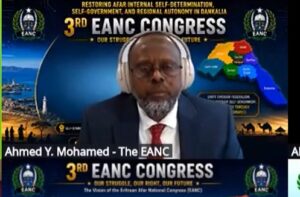
For further information about the event click here